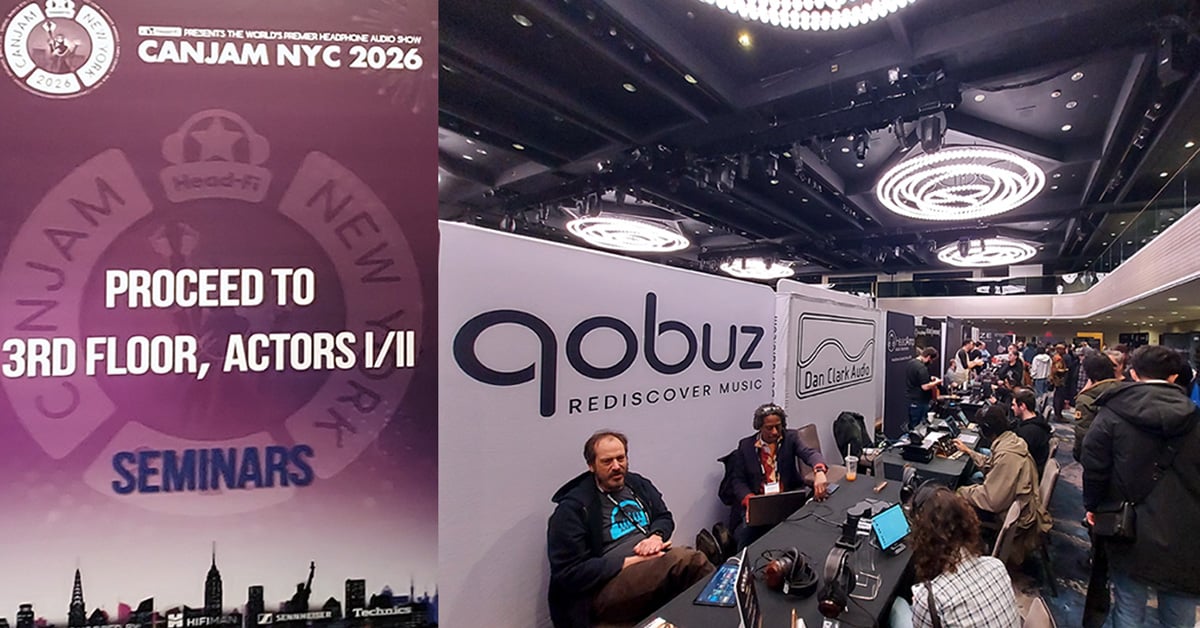
CanJam NYC 2026 overflowed with headphones
Personal audio got a little more personal at this year's packed show

C
anJam NYC 2026 was the biggest CanJam yet, quite literally. The “world’s premier high-end headphone show” filled the sprawling Broadway Ballroom and even spilled into the 6th-floor lobby area of the Marriott Marquis Times Square.
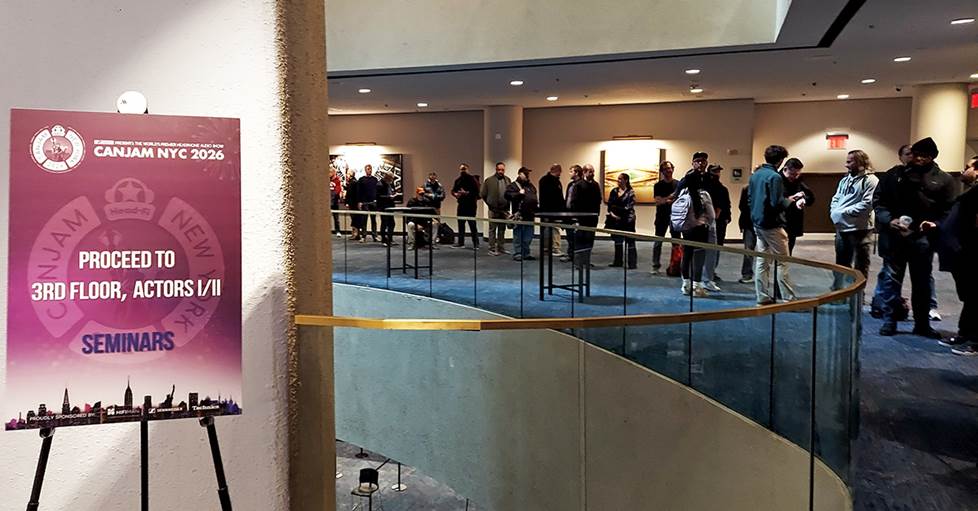
The CanJam line wrapped around the 6th-floor foyer, but this year there were booths and brands set up out there, too.
I was surprised and thrilled to see exhibits and brands snaking around the hotel’s extensive elevator system — each table filled with high-performance audiophile headphone gear. The event reportedly drew between 3,500 to 4,000 attendees throughout the early March weekend.
Not a bad crowd for a show dedicated to personal audio, a hobby built around listening alone. It was striking to see thousands of people gathering to compare notes — and increasingly embracing how different those notes can get.
What is CanJam?
CanJam is a series of international high-end headphone shows — organized by HeadFi.org — that serves as a gathering of die-hard enthusiasts, engineers and designers, industry insiders, and audio reporters and personalities. It offers exclusive demos of audiophile headphones, premium DACs, and powerful headphone amplifiers, with high-res streaming provided by Qobuz.
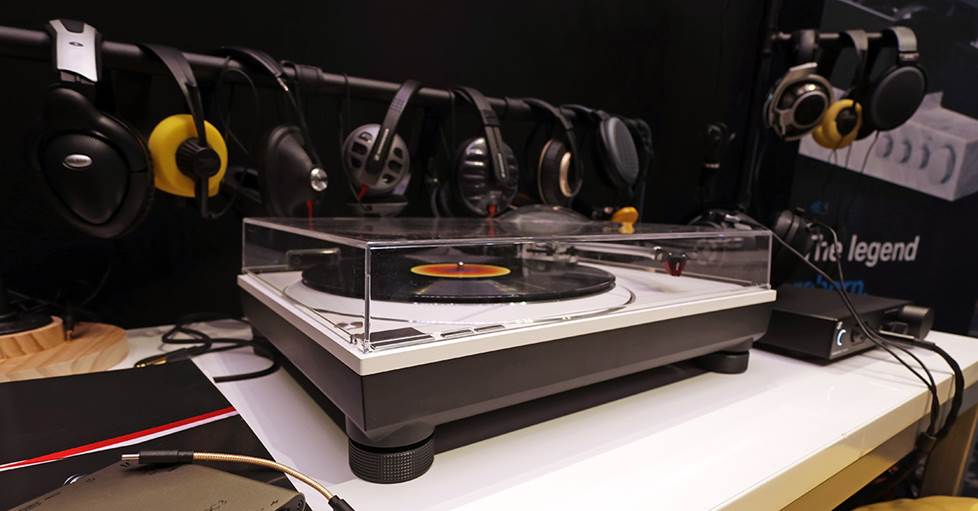
At the Sennheiser booth, there were decades' worth of classic headphones available to try — and they scheduled groups to visit their suite and spend time with their near-mythical, $60,000 Sennheiser HE-1 electrostats.
One major topic of discussion this year was how to make this personal audio gear even more personal. “For years, I tuned headphones only to my ears,” headphone luminary Axel Grell told me. “But we’re learning more and more about personalization and how to account for physiological and psychological differences. The idea is for, eventually, allowing people like me [to tune headphones] for your ears.”
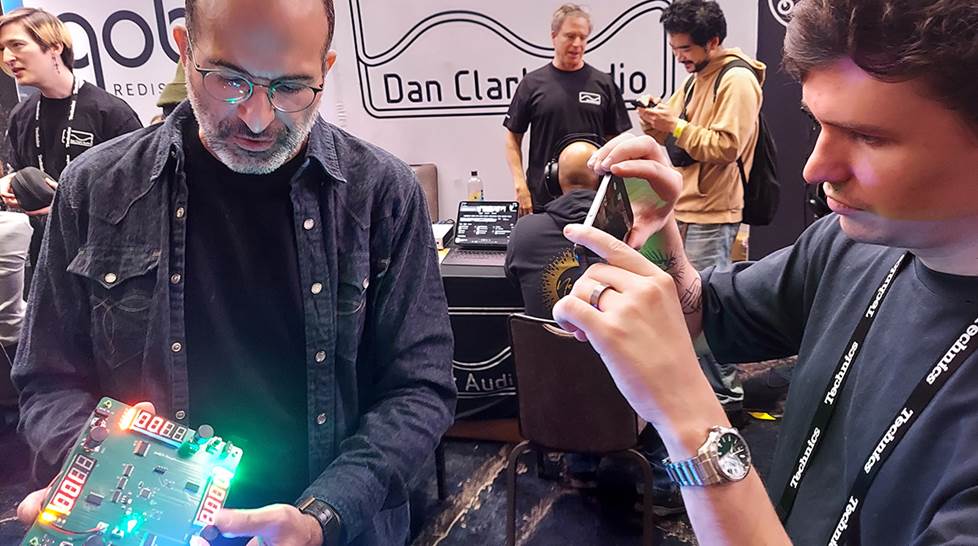
Maybe the most CanJam photo, ever: renowned YouTuber DMS films Philip Kaplan (of Pud's small-batch headphones) showing off his latest mad-scientist invention. Meanwhile Dan Clark tends to his booth in the background.
Throughout the weekend, I attended seminars and held conversations with professionals that carried similar themes. Even in this mass market industry, there’s become a real push to better cater to the individual. On the flip side, I spoke to several hobbyists who have become savvier and sharper over the years.
“I’m glad that a lot of the elitism, pseudo-science, and gatekeeping is going away [in this hobby],” said longtime CanJam showgoer and YouTube reviewer Shane Horn. "I've never been one of these purists who thinks you can only listen 'as is.’ I like using EQ to make great-sounding gear sound even better. I like a V-shape, so I bump the bass and treble a bit."
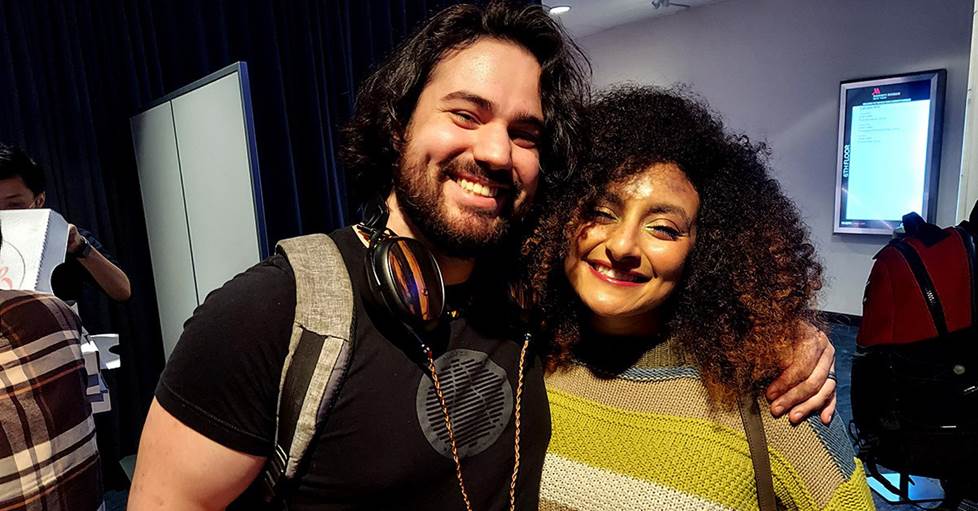
Shane and his fiancé Lexy have made it to several CanJams in the past. Shane was hoping to get his Meze LIRIC II headphones (around his neck) measured for his ears.
They also seem more accepting than ever. We all still enjoy — and partake in — playful snark between bassheads, detail junkies, and the reference crowd. But it’s no longer the end of the world if people differ in tastes, preferences, or their journey to (and through) this hobby.
Overnight trains, stacks of Macs, speakers as museum art, and… vinyl
My personal journey back to New York City began in Virginia, home of Crutchfield HQ. My colleague, Tommy, and I took the red-eye Amtrak train, leaving Charlottesville around 7:00 PM and arriving at Penn Station just after 5:00 AM.
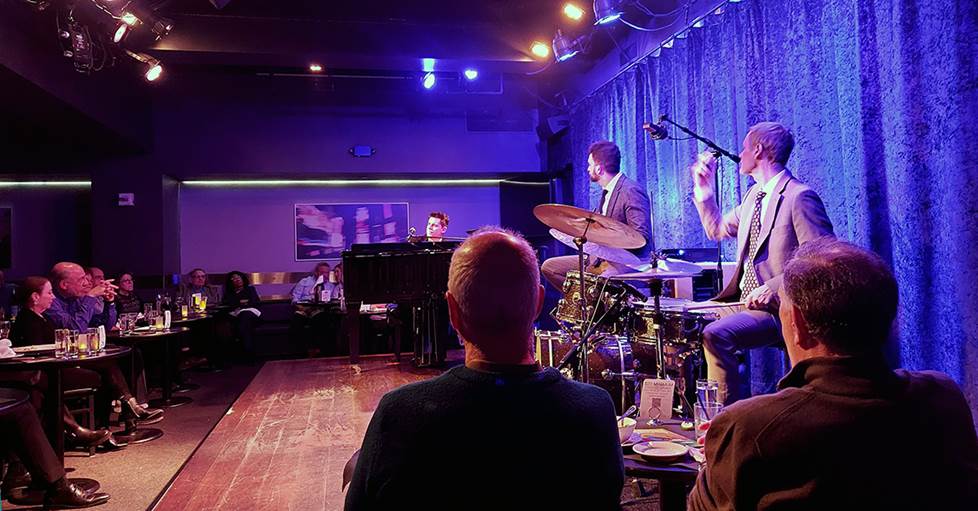
NY state of mind: one evening at the legendary Birdland Jazz Club, we took in skillful singer-pianist Tony DeSare's program The Billy Joel Songbook. We got a close-up look at drummer Michael Klopp's tight percussion.
At that hour, the city that never sleeps is still kind of drowsy! And most of the coffee shops weren’t open. Luckily, I was surprisingly well rested from the train and our hotel allowed an extra early check-in.
McIntosh House of Sound
After a quick powernap, we hit the streets just as the Manhattan morning had picked up. In a weekend full of personal listening, our first stop was the opposite extreme: a space built entirely around shared sound.
We hiked our way to the McIntosh House of Sound in the Chelsea neighborhood, a showcase for all the best gear from McIntosh, Sonus Faber, and other affiliated brands.
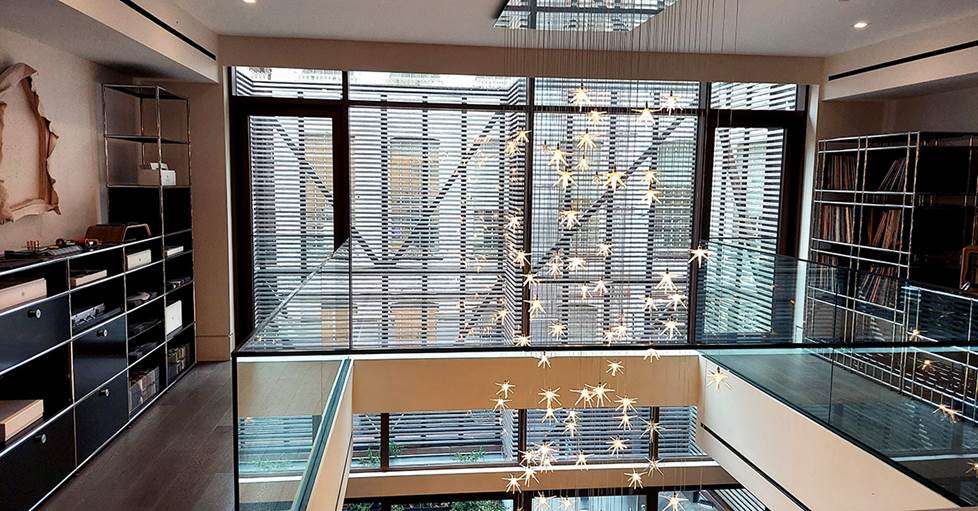
You might remember this room as an interior shot on the show Succession.
They’ve transformed a five-story townhouse into a sonic urban oasis. The classic Italian furniture, trendy décor, and crystal chandeliers are punctuated by stunning stacks of Mac amps and preamps with their glowing VU meters. Clean, powerful sound flows throughout this aspirational setting, lifting the spirits even further.
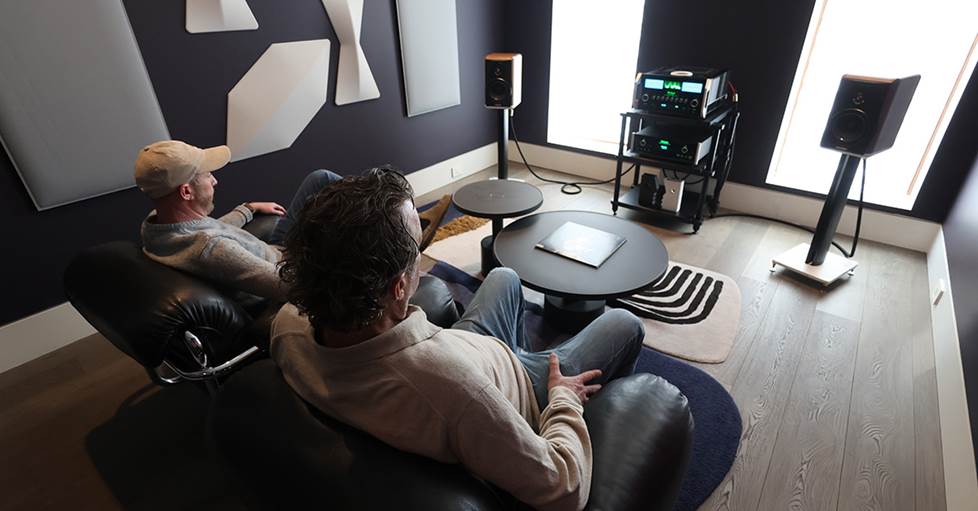
This more "modest" setup included the McIntosh DS200 streaming DAC ($4,000), the MA12000 integrated amplifier ($17,500), and Sonus Faber Guarneri G5 bookshelf speakers ($20,000 a pair).
Each room had its own charm and character — from large, loud, and luxurious, to intimate, cozy, and, well, still loud. But the good kind of loud. McIntosh loud!
In one high-ceiling room, powerful McIntosh separates fed the four-piece $850,000 Sonus Faber Suprema speaker system. Upright bass from the classic Shelly Manne Jazz album At the Blackhawk, Vol. 1 thumped both effortlessly and assertively through the system's pair of floor-standing subwoofers while horns soared from its two main towers to fill the vaulted ceilings.
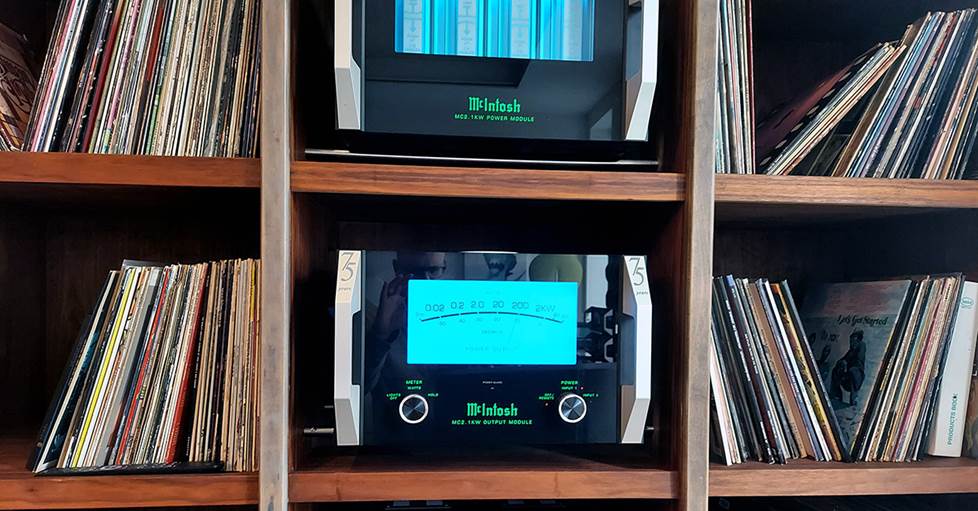
This system had two McIntosh Monoblock power amps — MC2.1KW ($57,500 each) and MC1.25W ($15,500 each) — dedicated to each channel.
The House of Sound also serves as an event space and on-location set for film and TV shoots. (I recognized one of the rooms from season two of Succession as Roman’s apartment.) While we were there, a fashion brand was preparing for a launch party later that evening. “So, I’m sorry for the extra hustle and bustle,” said McIntosh audio experience Manager Ricky Miranda, as he led us from one (epic) room to the next.
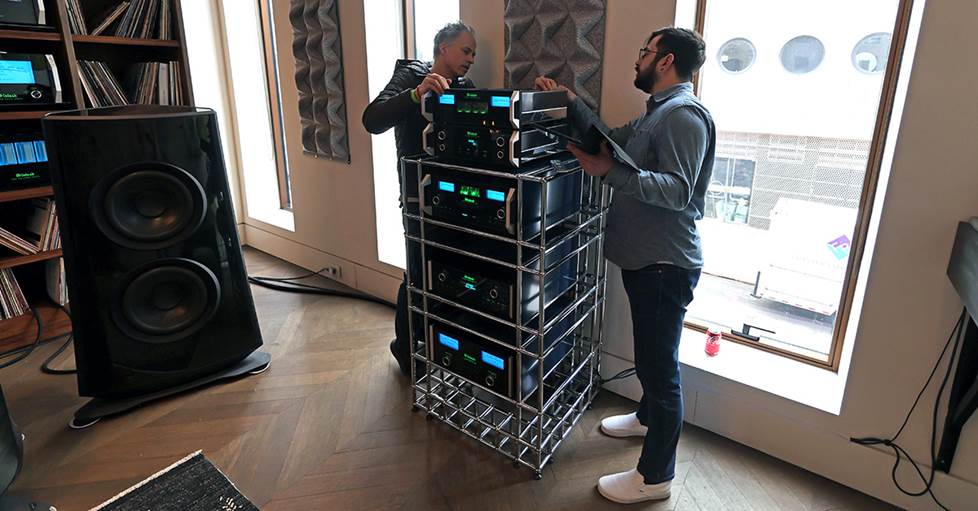
Team McIntosh prepared for the evening's soirée while they demoed the high-end stereo gear and room correction for us.
He didn’t need to apologize to me! I enjoyed the pure, brisk New York energy as designers, planners, carpenters, and caterers weaved around each other to get things ready. (Yes, they have a full chef’s kitchen complete with islands and professional-grade appliances.)
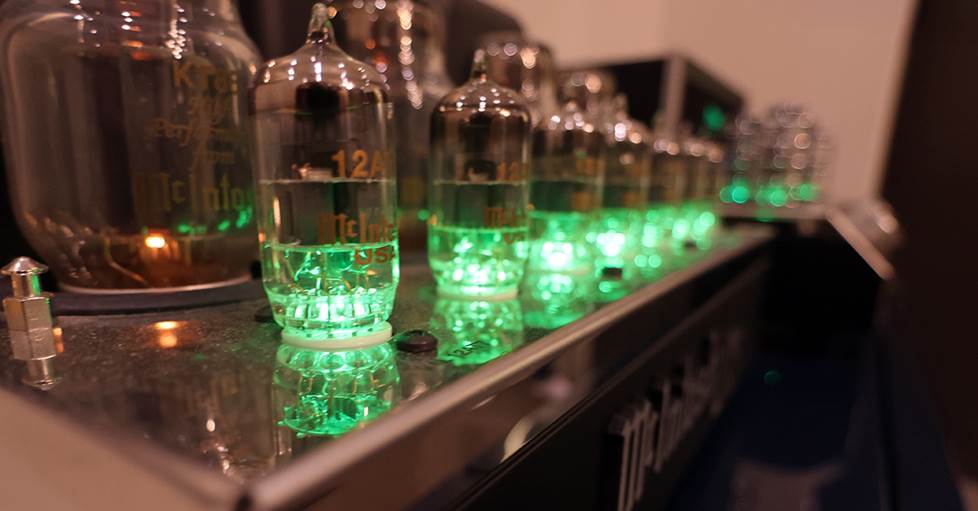
I was mesmerized by the classic glowing green vacuum tubes on the iconic MC275 tube amp.
The rush made it all the more satisfying when I made it to the leisurely top floor for a spacious living room setup, complete with floor-to-ceiling windows that open to a deck with a stunning view of Manhattan.
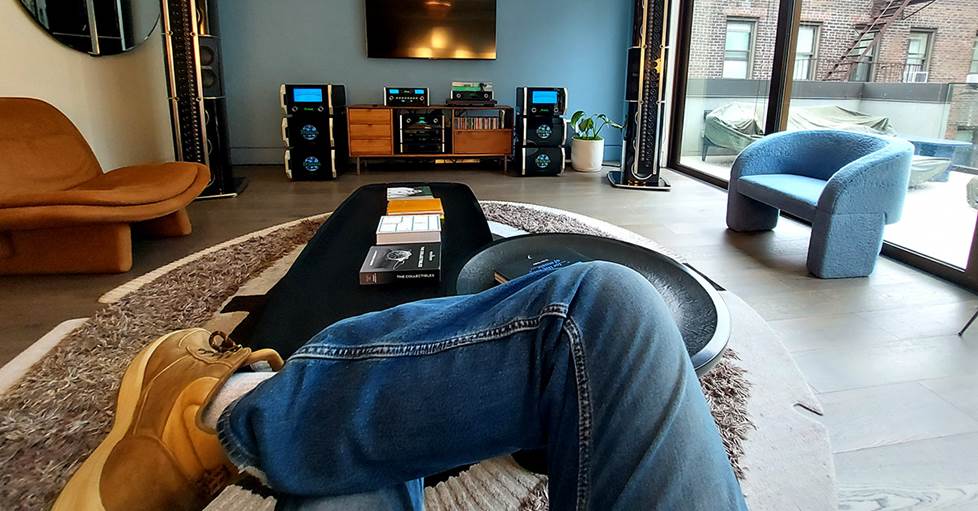
I could get used to living like this!
I'm used to seeing listening rooms with heavy acoustic treatments — but McIntosh was going for a more lived-in setting. “We don’t set these rooms up for maximum sound performance,” said Ricky. “We put our gear in rooms the way we know people will use them — and count on our components and speakers to deliver.”
There was one notable exception. The theater room was audio decadence for decadence’s sake — with a dizzying array of speakers that included surrounds, overheads, and sixteen in-wall subwoofers.
I was familiar with the atomic bomb scene in Oppenheimer, and even braced for it. But nothing could prepare me for the earth-rumbling blast from those subs. It was more overwhelming and impactful than when I saw the film in the movie theater. I think even Christopher Nolan would give this “home theater” setup a pass.
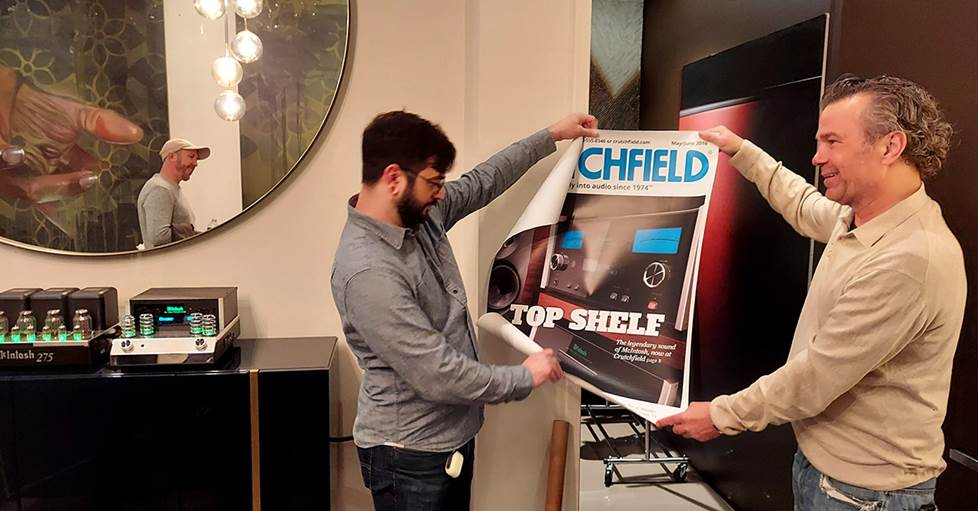
Crutchfield buyer Tommy presented Ricky with a poster of our May/June 2016 catalog cover to celebrate our 10th year carrying McIntosh.
Cooper Hewitt Smithsonian Design Museum
If McIntosh was about scale and spectacle, the next stop promised something different: a shared listening experience that felt almost entirely internal. Back uptown, we visited the Cooper Hewitt Smithsonian design museum. The primary exhibit was the “Art of Noise,” a celebration of music-related design on tour from the San Francisco Museum of Modern Art (where it originated in 2024).
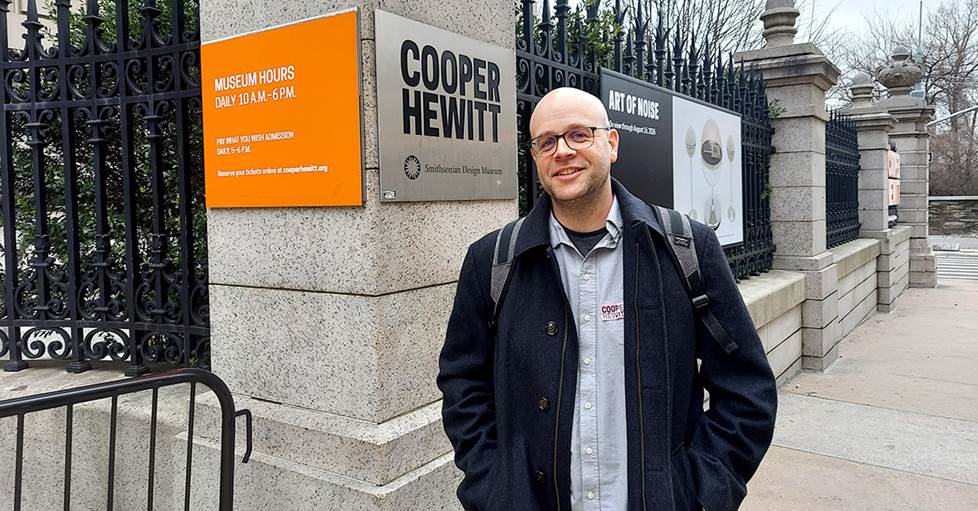
The Art of Noise museum exhibit will run at Cooper Hewitt through July 19th.
And it started in a room that once served as the personal library of Andrew Carnegie. There, Devon Turnbull, the multi-hyphenate artist, speaker designer, and installation specialist (also known by his pseudonym Ojas), built one of his renowned whole-room sound systems.
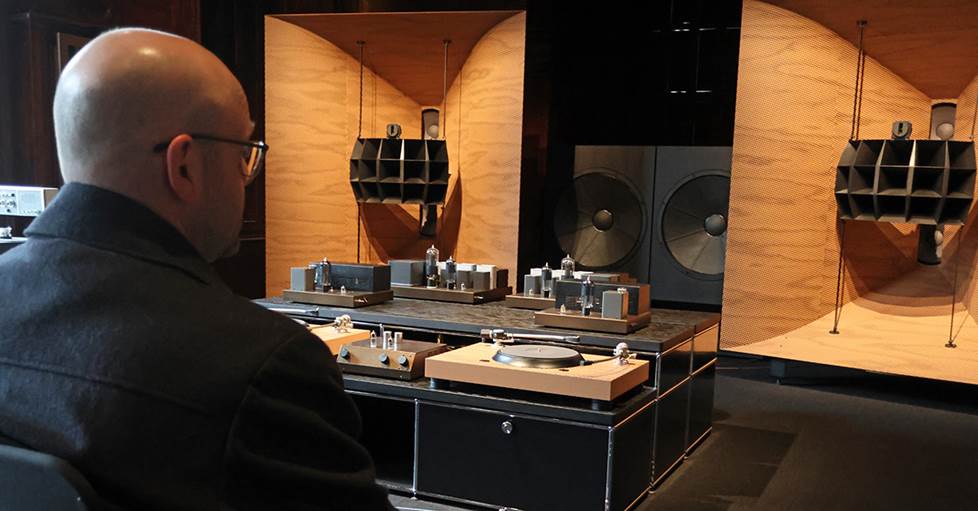
Devon Turnbull’s HiFi Pursuit Listening Room Dream No. 3 was both a high-end speaker setup and piece of living art that Turnbull calls “a shrine to music.”
Large loudspeakers covered the back wall. Turnbull’s hand-made horn loudspeakers stood nearly eight feet tall and over six feet wide, flanking two giant — as in 31.5 inches — Fostex FW800HS super woofers. Coming from McIntosh, where the philosophy was crank everything to extreme (yet, sweet and bearable) levels, I was surprised and impressed that the volume was restrained here.
The landmark jazz LP Charlie Parker with Strings spun on custom turntables while an array of vintage tubes dotted the amps and components. Museumgoers quietly moved in and out, but each of us took a pause to soak it all in.
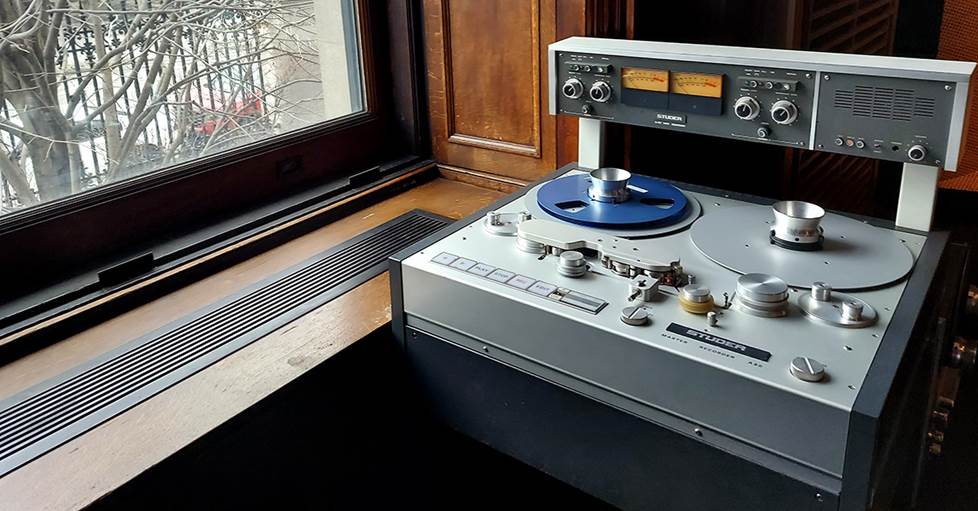
This work of art was also a work in progress — as evidenced by the parts, tools, and vintage gear tucked away from the main setup.
On the surface, this might seem like the total opposite of the CanJam floor, where everyone is listening in their own personal bubble. But it was very much in the same spirit as CanJam. This was a shared experience that could simultaneously feel introspective and meditative.
It turns out that’s by design. “We rarely play music with vocals,” Turnbull recently told ARTnews. “Vocals contextualize the experience too much. Once there’s a narrative it doesn’t let you just be with your own thoughts.”
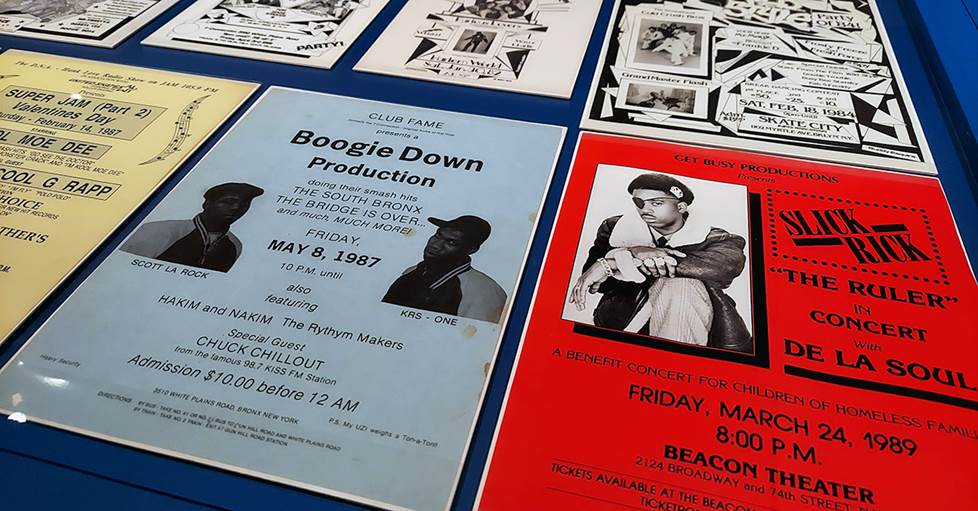
The Art of Noise exhibit included historic show posters and flyers along with classic listening gear.
Climbing upstairs to the museum’s third floor, we toured the rest of the Art of Noise exhibit. Some of history’s most seminal audio gear — early phonographs, an old-school Sony Walkman, the original iPod — sat next to its quirkiest, like Ron Arad’s concrete stereo and 1970s-era Bang & Olufsen U-70 headphones (lower right in the image below).
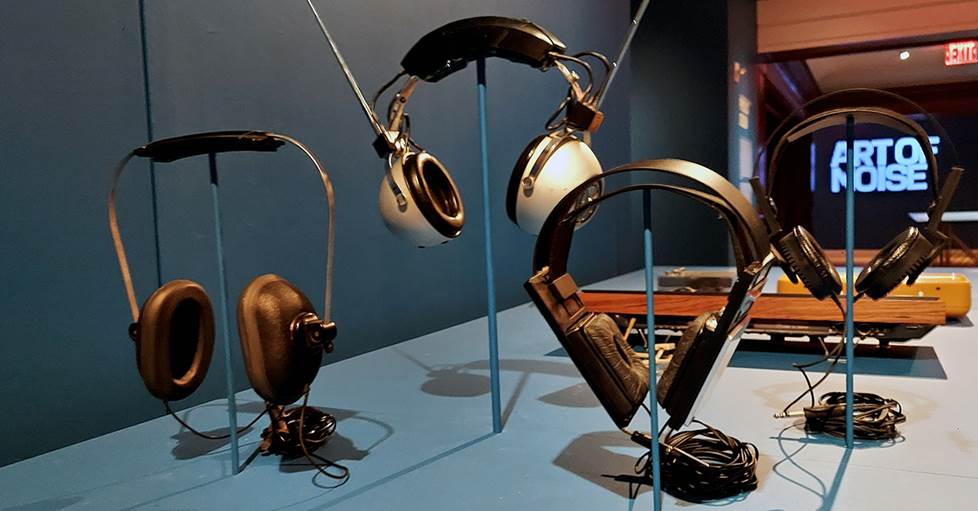
Some of the most interesting designs in headphone history were on display at the Cooper Hewitt museum — a nice appetizer for CanJam.
Whether commemorated or forgotten by time, seeing all these envelope-pushing designs together was heartening. We often lament when gear looks too “assembly-line,” so I’m happy that this exhibit gives some of the bigger swings their due. After all, art is in the eye — or sometimes ear — of the beholder.
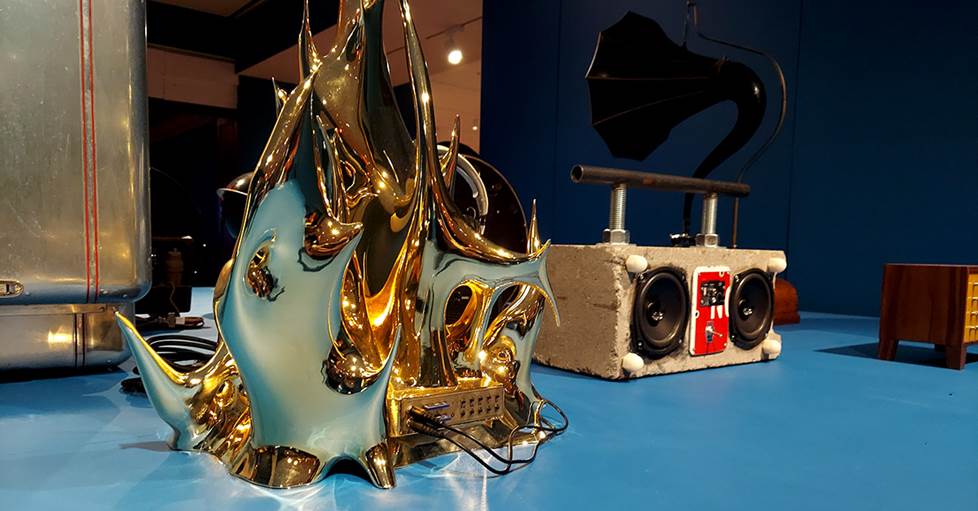
Some unique designs in the Art of Noise exhibit.
Dinner at Vinyl Steakhouse
What better place to reminisce about the day than the Vinyl Steakhouse over in the Flatiron district? Husband-and-wife owners Kevin and Sofie Flannery have built this into a bustling spot as popular for its inviting (and musical) atmosphere as its delicious entrees. (You can see what I mean in this recent video from Hi-Fi documentarian Jana Dagdagan.)
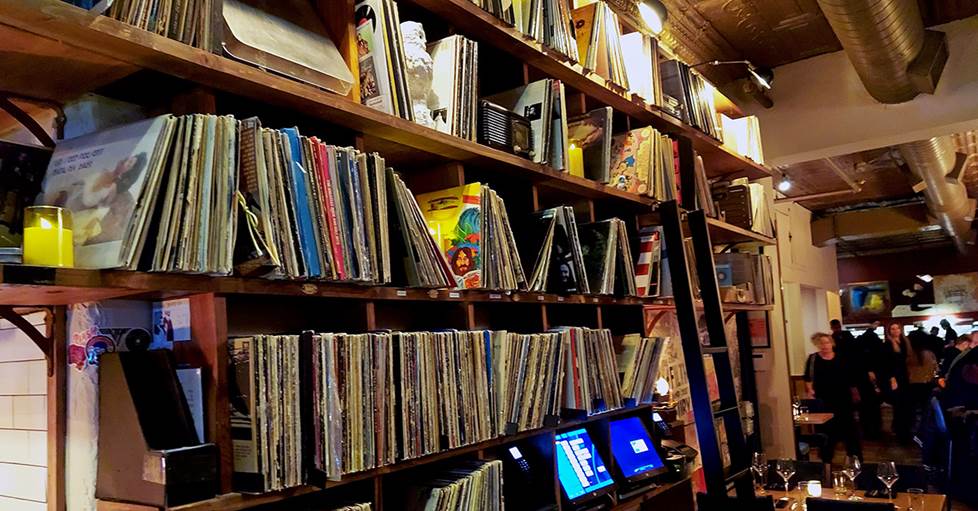
At Vinyl Steakhouse, we were greeted by shelves full of records and the savory waft of their gourmet dishes.
“It’s funny,” Kevin told us as he greeted our table. “We’re smack in the middle of ‘Silicon Alley’ (Manhattan’s tech hub) — and we love the energy. But yet, we like to embrace the warmth and slow-down ritual of analog.”
Fueled by dual Music Hall turntables, the staff keeps the records spinning a half-LP at a time. The idea is that allows people to capture the vibe of an album, but never get bored or tired of it. (For us, an extended Grateful Dead live jam faded out and blended into Bowie’s “Moonage Daydream” on the Ziggy Stardust record.) It was a fittingly old-school take on the modern dinner playlist.
And the perfect soundtrack to dinner with legendary audio reps Rick Tydings and Aaron Cochran. We shared stories old and new, all sparked by what we saw during the day.
Headphone impressions, conversations, and more at CanJam
If you like to see audio designs that push the envelope, then you’d love the CanJam floor. Head-Fi founder Jude Mansilla (pictured below) and CanJam Producer Ethan Opolion have created a traveling playground in all that is thrilling, fulfilling, and, yes, frustrating about personal audio. They’ve also helped cultivate a passionate, informed, and ever-growing headphone community.
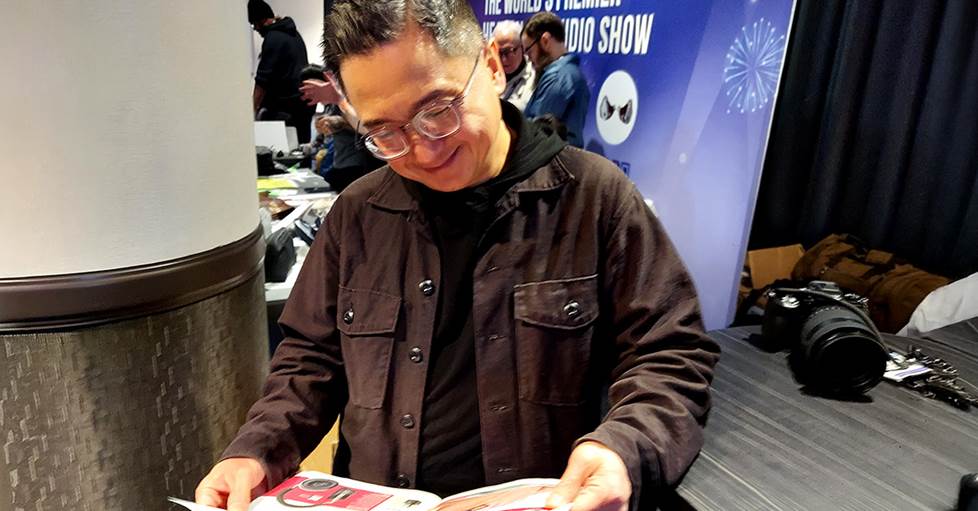
Jude Mansilla, founder of Head-Fi.org and the Godfather of CanJam.
Here’s a trivia note: Jude bought his first set of headphones at Crutchfield. “I ordered the Sony MDR-V6 from the [Fall 1985] Crutchfield catalog,” he told me as he thumbed through our current issue. “I actually wanted a pair of AKG 240s, but at the time they cost $120. I told my mom who said, ‘well, do you have $120?’ A not-so-subtle way of telling me to stay in my budget.”
Those Sony professional headphones boasted sophisticated sound for their time, but Jude’s tastes, industry research, and this hobby’s collective knowledge have evolved greatly.
Sennheiser
If there was one product on the floor to exemplify that evolution, it might've been the Sennheiser HDB 630 wireless noise-canceling headphones. There was a time when audiophiles ignored Bluetooth — and indeed most of the headphones at this show still use a cable. But the line to try the HDB 630s was often long. And these headphones have been a hit since day one, largely because they can hang sonically with the company’s legendary wired HD 600 series.
In my recent review of the HDB 630 headphones, I marveled at how they handled the sonic extremes of the hip-hop track “Pour the Henny” by Mobb Deep and Nas: “The production features gritty east-coast boom-bap foundation topped with a classical choir, with the vocals well-placed within.”
The other big HDB 630 breakthrough is the precise sound control offered with the parametric EQ function on Sennheiser’s mobile app. This equalization tool lets you dial in the gain, frequency, and bandwidth using a series of sliders, filters, and slope adjustments on your phone screen. In other words, Sennheiser made some of the best-sounding wireless headphones ever — and they’re willing to let you ruin them.
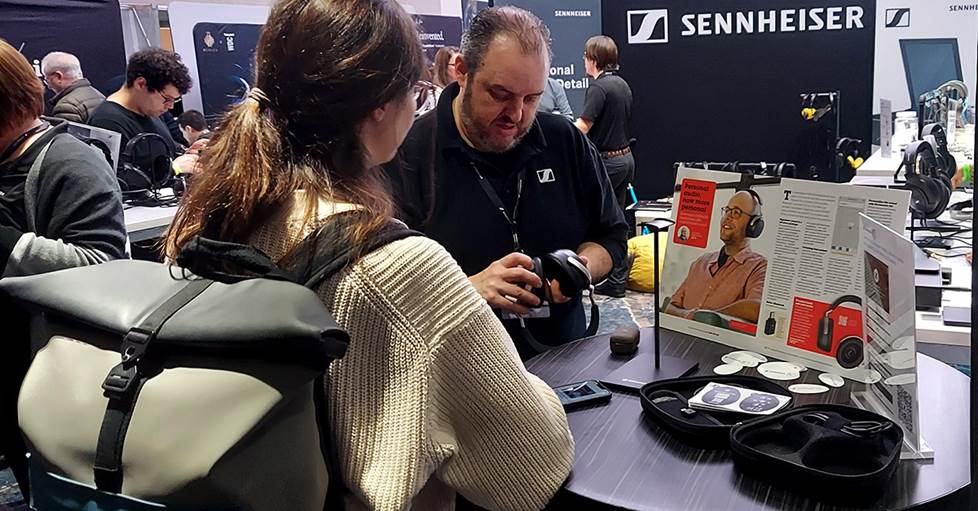
CanJam is primarily focused on wired headphones, but the wireless Sennheiser HDB-630s were a major draw this year.
When I noted the irony in my review, Sennheiser’s Senior Product Manager Wee Hong Kuan politely explained I was missing the point. “A well-tuned headphone will benefit more from a parametric EQ,” he said, “because it requires less compensation and you have more headroom. So, you can hear the full effects [of your sonic tweaks.]”
Extrapolated further, as the baseline for “good” sound improves, the conversation is moving away from chasing a single ideal and toward refining what each listener hears as their own. And we — the larger headphone population — can feel better about disagreeing if we prefer different things. No need to yuck somebody’s yum.
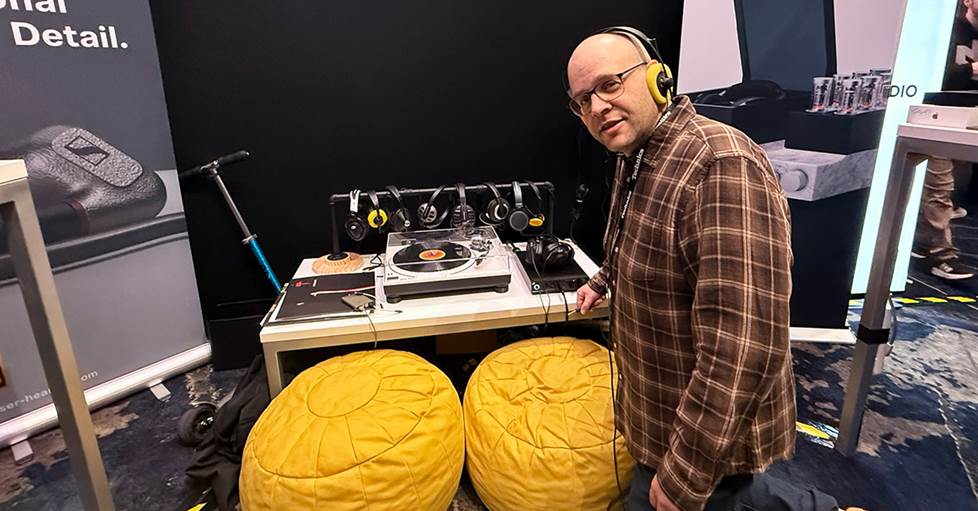
I jump at any chance to listen to the OGs — Sennheiser's HD 414 on-ears might surprise you if you've never heard them (or bring you back if you have).
Take the HD 550s, a newer member of Sennheiser’s more “classic” wired audiophile family. They’re based on the older HD 560S — a neutral-tuned headphone and our pick for "audiophiles on a budget." But the HD 550's design was informed by feedback from headphone fans who wanted a little more bass punch.
Grell Audio
It’s hard to talk about modern headphone tuning without bringing up Axel Grell. After decades shaping some of Sennheiser’s most iconic headphones — like the HD 600, HD 650, and HD 800S — he’s now dabbling in new ways to account for people’s perceptive and anatomical differences.
With his latest work at Grell Audio, that means rethinking how headphones present sound altogether. His OAE series takes an unconventional approach, placing drivers toward the front of the ear — more like a pair of speakers than traditional headphones. The goal is a greater sense of space and depth. However, reviews for the original OAE1 were mixed.
Some found the positioning made them simultaneously shouty while prone to over-extension in the bass. (Read the profound, well-researched article by Griffin Silver that questioned the essence of “soundstage” in headphones at all.)
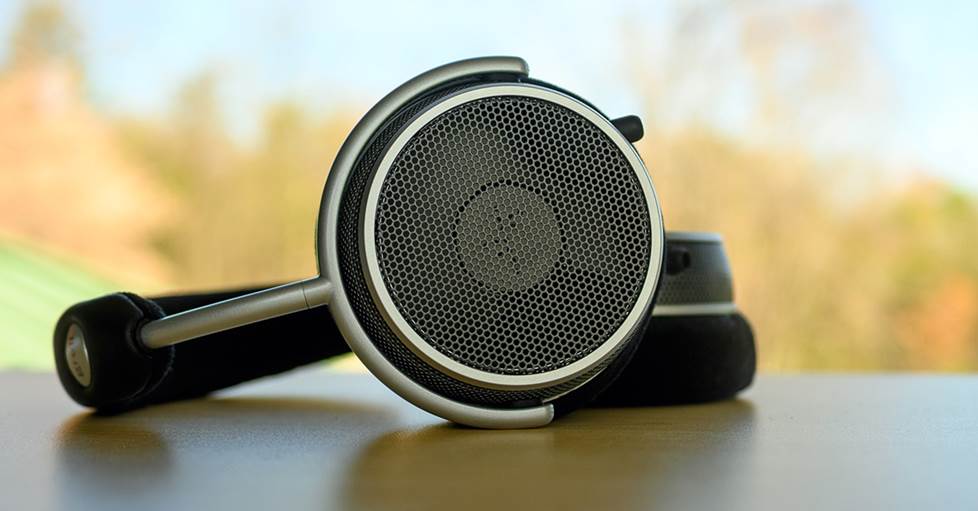
I spent some time with the Grell OAE2 headphones back in Virginia where the unique sonic presentation rewarded repeat listens.
Grell was not deterred. He created the new OAE2 headphones in response to the feedback, but stood by the original concept. In fact, he told me he doesn’t consider the OAE2 a course correction — but rather an alternative.
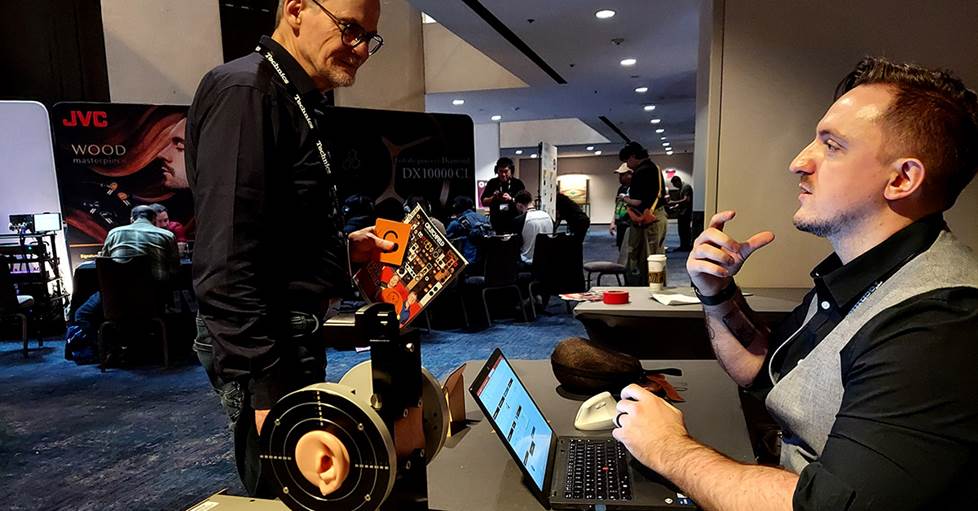
Axel Grell (left) talks to acoustic engineer Konstantin Davy (known on the boards as Oratory 1990) who brought a GRAS 45CA fixture to measure attendees' headphones.
I found myself gravitating toward the newer model. The presentation felt more cohesive, with tighter bass and a clearer sense of placement. Vocals, in particular, seemed to come from in front of me rather than inside my head — it took some getting used to, but paid off once it clicked.
That adjustment period is key. Most music is still mixed on speakers, Grell noted, yet we listen on headphones. He explained that his job is to meet everyone where they are.
Meze Audio
Meze Audio knows how to make products that stand out. Founder Antonio Meze and his design team are celebrated for making keepsake headphones that look like works of art. (We voted their 99 Classics V2 as Crutchfield's most comfortable headphones.)
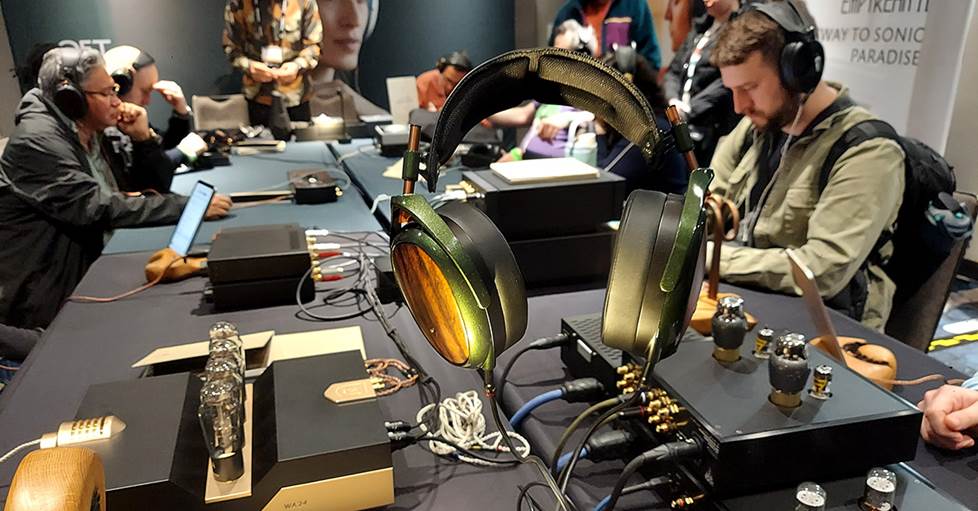
The emerald-tinted Meze Strada headphones sat front and center in Meze's private room.
Case in point, their new stunning and well-sculpted STRADA headphones — sitting front and center when I entered their private conference room, just off the CanJam floor. In my review of the Strada, I noted how these attractive headphones resemble the company’s higher-end LIRIC II closed-backs (the ones Shane had around his neck when I entered the show). But they also get you sonically 90% there, at a lower cost.
That’s a reverse to the show consensus around Meze’s newest headphones, the ASTRU in-ear monitors (IEMs). These wired IEMs are tuned similarly to the customer-favorite Alba in-ears and likewise use a single driver design. But true to Meze form, the diaphragms and earpieces are engineered and built to a head-spinning degree.
Each earbud housing is CNC-machined from a single block of Titanium. And the rigid, lightweight diaphragms are coated with 80 ultra-thin layers of gold using a meticulous, 48-hour process. The results? Hobbyist/reviewer Juanita Zemba — known on the headphone boards as BunnyGal23 — astutely noted, “It’s everything I love about my Alba [IEMs] and heightened to the next degree in timbre and texture.”

Juanita calls herself, “an admitted Meze fangirl,” but as Bunnygal23, she’s also one of the sharpest, most perceptive reviewers on the Head-Fi boards.
Grado
When it comes to tried-and-true craft and handiwork, the name Grado rings out. They still build their headphones in the same Brooklyn shop that’s been in the Grado family since 1918. And at the show, chief headphone-maker John Grado, his son and VP of operations Matthew Grado, and COO Rich Grado (John’s brother) were there to show off their latest wares.
It was my first chance to hear the debuting Signature S550, their newest wood-based headphones. I don’t know if it was the Brazilian walnut ear cups — that’s a dense wood popular in guitar making — or the company’s new “B-cushions,” but first listen, I like this direction for Grado. Listening to a curated Qobuz playlist of alt-country, the biting twang of the guitar came through with heft and distinction, without leaning as bright as some past Grado headphones.
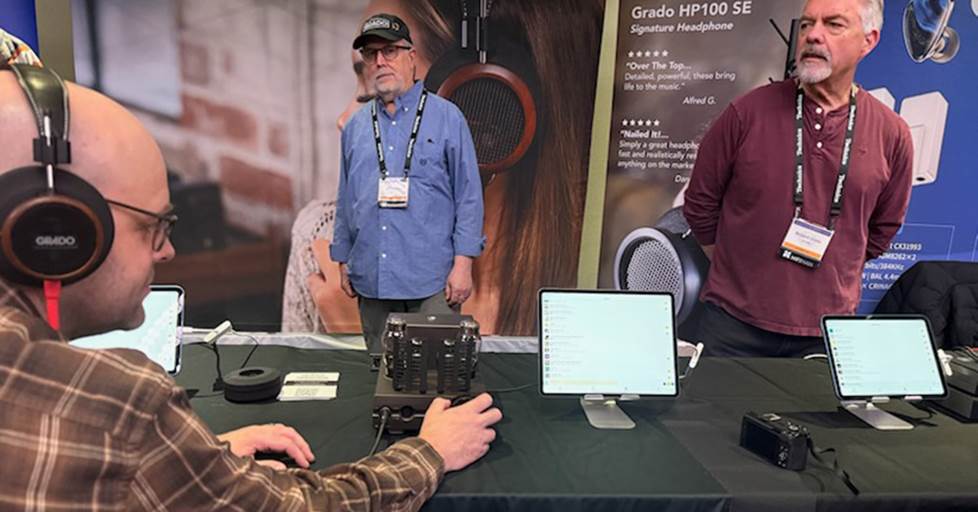
John and Rich Grado watch on as I try out their newest wooden headphones, the Signature S550 over-ears.
The B-cushions are kind of a Goldilocks mash-up between the company’s traditional F-cushion pads and larger G-cushion pads. Instead of sitting flush on the ears like the former or enveloping them like the latter, the B-cushions hit the sweet spot for me in terms of comfort and sound. In fact, I thought the pads helped level up Grado’s newest flagship open-back Signature HP100 SE headphones by bringing the sound presentation a bit closer, without my ears taking the brunt of the weight.
“It’s all about giving people a choice,” said John, before adding with a timeless New York smirk: “I know what I prefer — and of course I’m right. But I’m not here to tell you what you should like.”
Audio-Technica
Speaking of flagship-level open-back headphones, Audio-Technica has one of my favorite new releases in that area, the ATH-ADX7000. Here at CanJam, they gave us a look under the hood at the drivers powering these headphones.
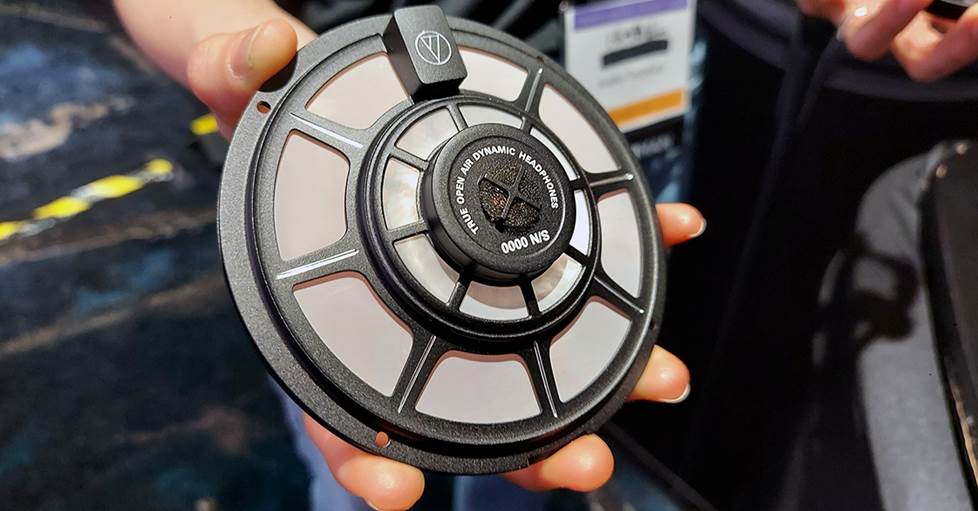
A look at the oversized, open-air dynamic drivers found in the flagship Audio-Technica ATH-ADX7000 headphones.
Audio-Technica didn’t reinvent the wheel here. The ADX7000 sports the same "lightweight, yet substantial" build quality, dynamics, and pinpoint imaging of their predecessor, the ATH-ADX5000. But you get a less-bright tonality that still serves up heaps of high-end detail and sparkle. The mids and vocals have slightly more presence while the bass punch remains quick and potent versus overpowering.
One of the key people involved in their development is headphone engineer Shiwaku Nonomi, who I’ll have the chance to interview later this year. I’m psyched to talk to her coming off the wonderful, charming 15-minute documentary on her day-to-day, “Always Listening,” directed by Nick Dwyer.
That film centered around the creation of the ATH-R70xa, yet another Audio-Technica headphone developed for professional use that has become popular among the high-end headphone crowd. The studio-staple ATH-M50X is still considered an “audiophile gateway."
Beyerdynamic
You can’t talk about studio staples without mentioning Beyerdynamic. Their DT 1770 Pro MK II closed-backs drew steady interest from attendees looking for a closed-back “reference” headphone. One of my favorite recent 5-star Crutchfield customer reviews (from Blair in Montana) kind of tells you all you need to know about them: "As a drummer, I was looking for a combination of very good sound isolation, comfort, and overall sound quality. Home run!! These are exactly what I was hoping for.”
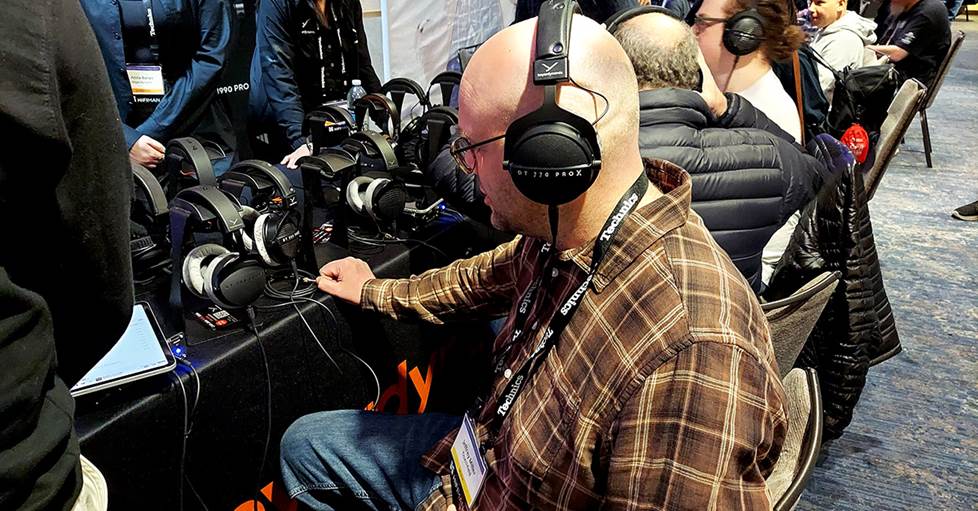
The closed-back DT 770 Pro closed-backs do a good job of passively isolating sound, even among the record-breaking crowd.
As we continue to refine our SpeakerCompare shopping tool, we’ve been using Beyer’s classic DT 770 Pro closed-backs for recent testing. We developed this technology to simulate the sound of home and car speakers through headphones, so accuracy and detail are important. So, we turned to headphones that have been a fixture in top recording studios for just that purpose.
Audeze
Sonic accuracy and detail can be a competitive advantage in gaming, too. Just ask our in-house gaming expert Colin who recently reviewed the newly released, top-selling Audeze Maxwell 2s — and named them Crutchfield’s top gaming headphones. “The Maxwell 2 did an admirable job selling the sheer spectacle of the huge battles [in Dynasty Warriors: Origins]. It also provided clear separation, ensuring I was able to easily keep track of nearby threats and catch important snippets of dialogue from my allies about where to take the fight next.”
How do these headphones parse through these important sonic details better than the average gaming headset? Audeze’s high-grade planar-magnetic drivers. It’s why the company has been a stalwart at CanJam since 2009, “when we started with only half a table,” owner Sankar Thiagasamudram fondly recalled.
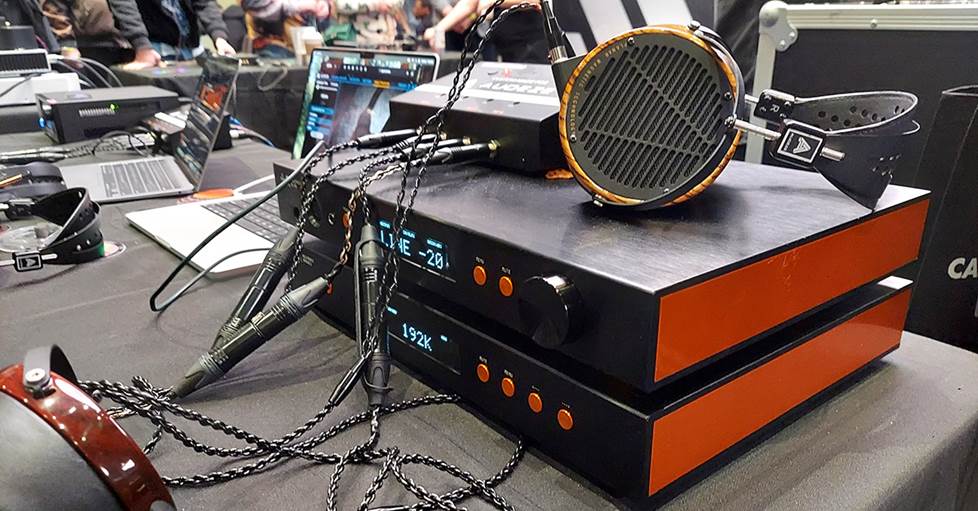
Classic large and in-charge Audeze planars (like the LCD-2s) are still a big hit at CanJam — but their gaming headsets like the Maxwell 2 have become equally popular.
Their presence has certainly grown. This year, Audeze occupied one of the “can’t miss” anchor spots that greeted you as you entered the main floor. And while the line to try out the Maxwell 2s stayed deep all weekend, this crowd was just as eager to try their recently revamped flagship, the LCD-5s.
Because of the demand, I didn’t get much time with these headphones. But they are an update to the original LCD-5s, that I named “best for vocals” on our list of the best audiophile headphones. I heard enough to know that they offer a similar vocal-forward presentation — and Audeze has included their “SLAM” air pressure distribution system. It was originally developed for the CRB2 electrostatic headphones and designed to enhance and reinforce the bass.
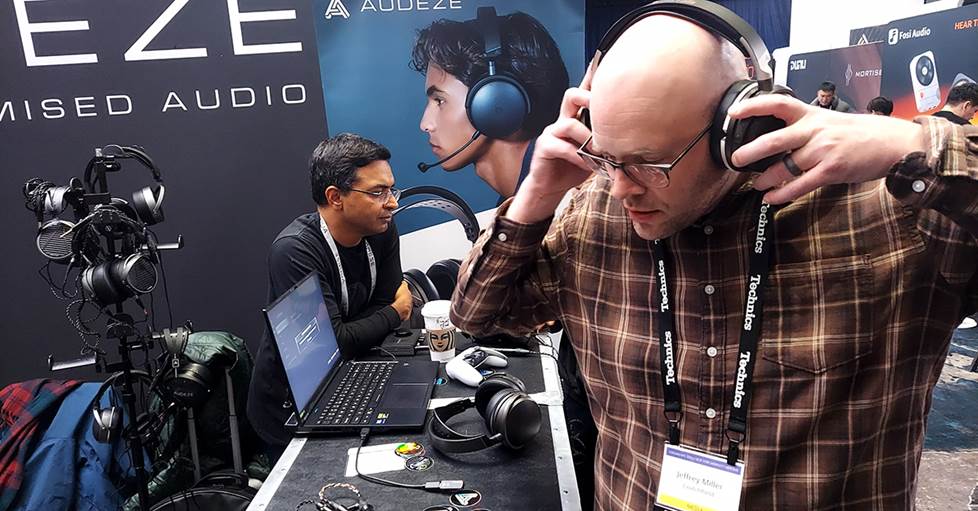
The loud CanJam energy mellowed out when I activated noise cancellation on Audeze's prototype of the forthcoming Maxwell 2 ANC.
Sankar and company also gave showgoers a glimpse into the near future. He had a set of the forthcoming Audeze Maxwell 2 ANC, that adds active noise cancellation to the formidable gaming headset. (The two main hang-ups people have with the current Maxwell 2 are the lack of ANC and the heftier size — since the planar drivers need more room and space.)
The busy CanJam floor was a good test ground for noise cancellation. And it quieted all the clamorous commotion to a mere murmur. I was equally impressed when Sankar showed me their internal testing of their noise cancellation. He wouldn’t allow me to publicly share their findings — or name names — but let’s just say these headphones fare well against all the heavy hitters in the category.
JVC
Here in the US, JVC may not be the heavy hitter in headphones that they are in car stereo. At least not yet. But in their origin country of Japan, their IEMs are highly renowned for their premium wood diaphragms.
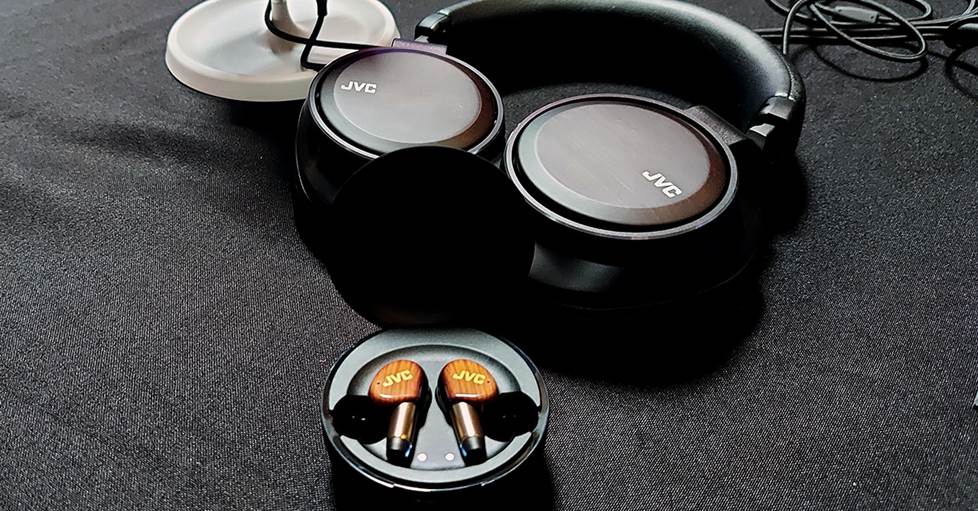
Along with the striking real-wood finish, the JVC HA-FW5100T wireless earbuds (foreground) use diaphragms made from a blend of wooden pulp and African rosewood.
Their WOOD masterpiece HA-FW5100T true wireless earbuds deliver that warm, resonant sound in an even more travel-friendly design. It’s an approach that feels less clinical and more organic, especially with acoustic and vocal-heavy tracks.
iFi Audio
iFi Audio took a different approach to personalization. Their new iDSD Phantom is a true all-in-one: DAC, amp, preamp, and streamer. I was stoked to see this “kitchen-sink” component in person. And it did not disappoint.
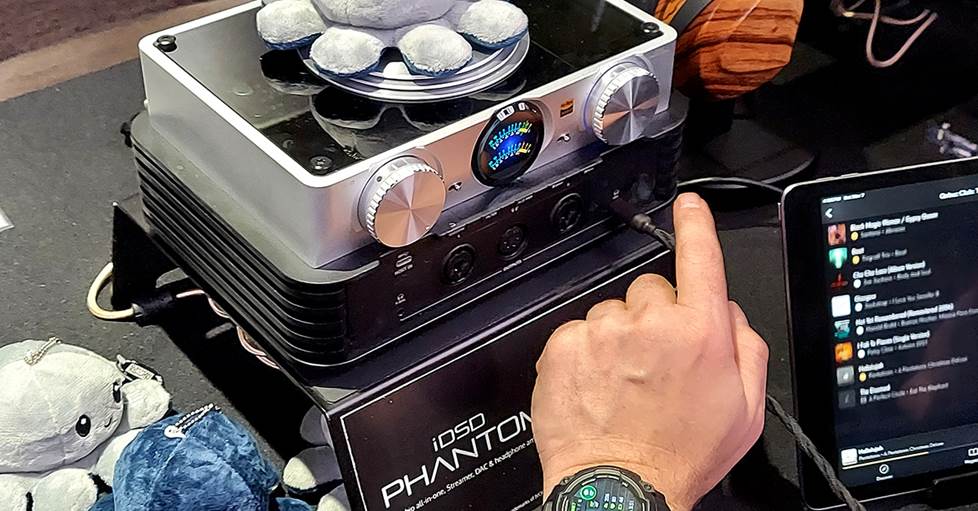
The "all-in-one" iDSD Phantom has the power and precision to drive most wired headphones, including those with a super-high impedance.
The connection options seem to never end. It also had plenty of power for notoriously hard-to-drive headphones. For example, I listen to a set of higher impedance (300-ohms) ZMF headphones comfortably without even turning the volume dial halfway.
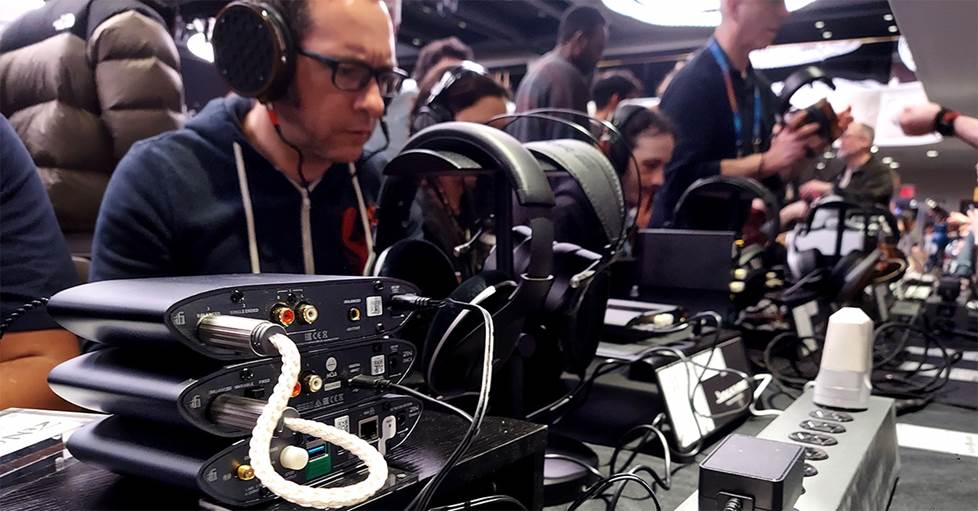
As cool as iFi Audio gear looks in the front, I always geek out more over their back-panel connections.
iFi also had some of their smaller desktop and portable gear on display including the iDSD Valkyrie and a stack of their ever-popular ZEN gear. (I use a stack of the ZEN DAC 3 and ZEN CAN amp in my smaller desk setup at home.)
And a small piece of iFi went with me throughout the show. The thumb drive-sized iFi GO Bar is my travel DAC/Amp of choice. It packs neatly inside the case of my Sennheiser IE 600 IEMs, so I could use it test other IEMs all around the show.
Crinear
There was one IEM booth where I was willing to wait to listen. All these years I’ve run into Crinacle at shows, I’ve never heard his headphones. I was glad I got a chance, because his new Crinear Reference IEMs were some of the best I heard at the show.
Crin offers different variations of his headphones, sometimes with ever-so-slight tuning adjustments. I arrived the same time as mad-headphone-scientist Pud, who preferred the small-batch Meta IEMs, which offered a little more punch in the low end. I was almost embarrassed to admit I preferred the Reference. They had the flattest frequency response, so Crin joked that they were “the least fun, for the least fun people.”
But again, this was the safe haven, CanJam — so I knew his comment was in jest and free of judgement. At least, I think it was.
Seminars: headphone research gets closer to your ears
If you’ve read other CanJam recaps, you’ve no doubt come across people who don’t like the same headphones that I like. And vice versa. And yet, compared to the past or other hobbyist spaces, those disagreements rarely turn hostile.
A big reason for that is simple: headphones have gotten much better. The wild-west era from eight or nine years ago, where tuning felt erratic and unpredictable, has largely passed. Today, most headphones land somewhere within a broadly acceptable range of sound quality.
Now, of course there are still objectively bad headphones — and head-scratching outliers with extreme tunings. But for the most part, those are few and far between.
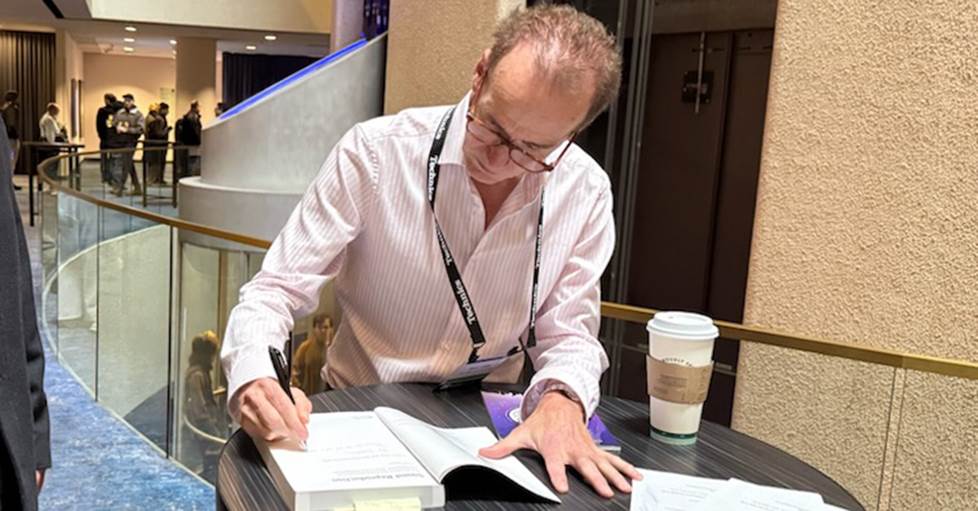
Dr. Sean Olive signs our copy of the new 4th edition of Sound Reproduction, the definitive reference guide to audio engineering, which he co-wrote with Floyd Toole and Todd Welti.
One of the biggest forces behind this shift is the “Harman Target” listening curve, developed through years of research led by Dr. Sean Olive.
That work established a reliable baseline for what most listeners tend to prefer — and a good starting point for headphone tuning. Manufacturers don’t have to adhere to it exactly, but having a shared reference has made the overall landscape far more consistent. And once that baseline was established, research could move beyond what sounds good in general to why and how it sounds different for each person.
At CanJam, Dr. Olive presented new research conducted with Rtings engineer Pierre Lelièvre on harmonic distortion. (Detailed in their online article “The Truth About Headphone Distortion.”) Their conclusion was pretty straightforward: at normal listening levels, distortion generally isn’t a major factor in perceived sound quality. In other words, one more variable that some assumed to be critical turns out to matter less than expected.
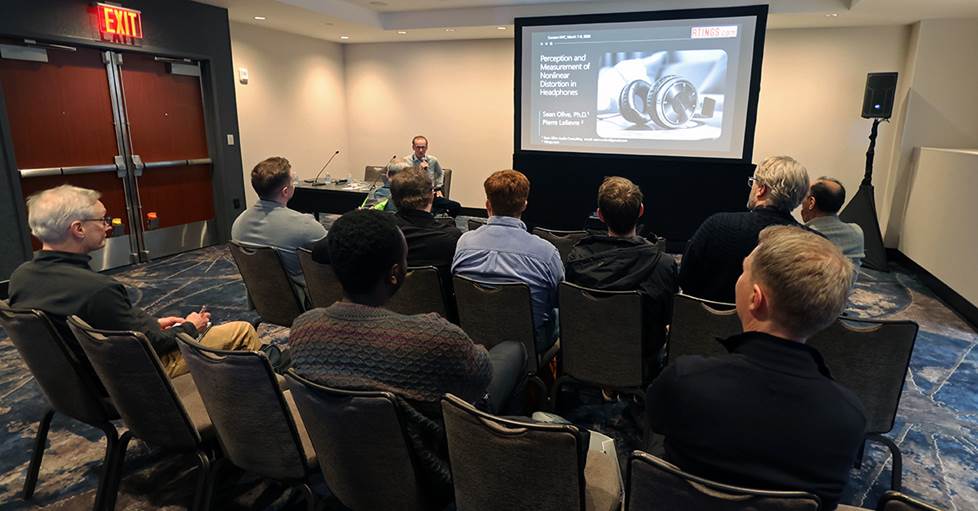
Dr. Olive presented his latest study with Rtings on headphone distortion.
This steered the conversation in the room toward the listener. Headphone measurement gurus "Mad Economist" Blaine LaCross and Joel Merrifield (MinimumPhaseJoel on the boards) were in attendance. They discussed HRTFs — head-related transfer functions — and how individual anatomy affects what we hear.
While a 2018 study from the University of York suggested HRTFs may not strongly impact perceived sound quality in stereo playback, other research pointed in the opposite direction.
Joel found it tucked inside a study by Meta on directionality in spatial audio. In that study, the perceived sound quality improved when listeners used their own individualized HRTF and decreased as the HRTF became less personalized. "The results are very noisy," said Joel. "The study clearly [wasn’t designed to reach a conclusion on sound quality], but there was a direct correlation between perceived sound quality and whether they were using the individual’s HRTF versus someone else’s.”
The takeaway wasn’t a definitive answer, but rather that personalization is still an open question. (Dr. Olive later wrote on social media that, "what's missing is controlled listening tests to quantify how much personalization can improve the sound quality.")

A key slide in Konstantin Davy's (Oratory1990) seminar shows how the same closed-back headphones can sound slightly different to different people.
That idea was reinforced by a Sunday seminar from Konstantin Davy, who measured how headphones interact with real human ears. His findings showed noticeable variation in frequency response depending on the individual — more in the higher frequencies for open-backs and the lower end for closed-backs. The causes could be anything from ear shape to seal, but the implication is clear: the same headphone can sound meaningfully different from person to person.
The encouraging part is that these differences are usually small and correctable. With careful EQ, listeners can dial in a sound that works for them.
Final thoughts from the weekend
This year, even CanJam couldn’t escape reality. Current events kept some key people from attending the show and there was a palpable angst in the air around town. But I still found myself encouraged by the weekend's theme of personalization.
We’ve reached a point where most headphones are “good enough” in a general sense. The remaining differences aren’t necessarily about "right" versus wrong anymore. They're about the individual.
Now in many other corners of modern life, we've seen this type of personalization divide us. Our playlists, social media, and newsfeeds are shaped to reflect our preferences back to us — sending us further into isolation.
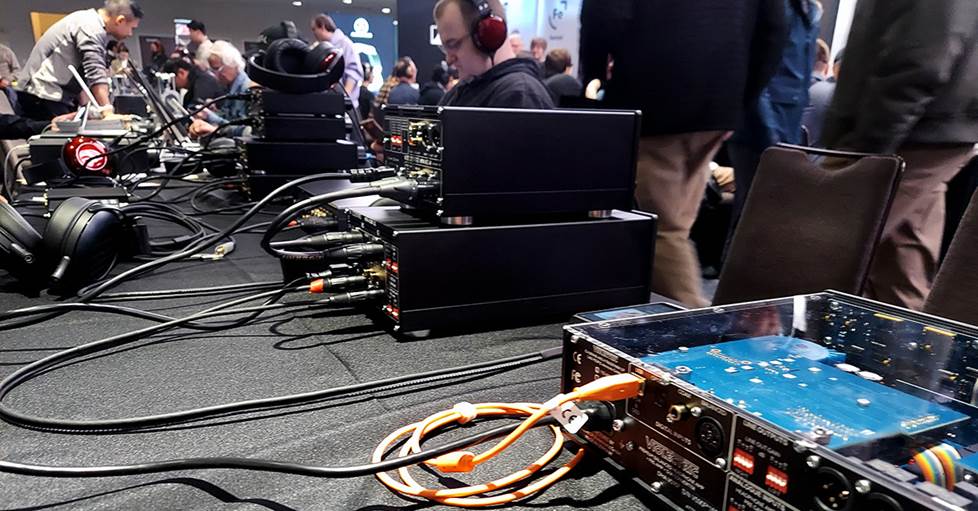
We may all listen by ourselves at CanJam — but we're never alone.
But at CanJam, it seems to be doing the opposite. There's an understanding that everyone hears differently, whether it's due to taste, experience, hearing loss, or something else physiological. It's taken the edge out of disagreement. It's less about hard truths and more about curiosity over why different things work for different people.
It's probably small in the grand scheme of things. But in a landscape defined by algorithmic silos, the welcoming accessibility of CanJam is something. Shane told me a story from a past show where he auditioned a set of headphones by listening to "Shining Moon" by the Cowboy Junkies. He's now convinced there was some EQ or "sweetening" going on, but back then nobody really wanted to admit it.
"I vividly remember the upright bass that plays in that song," he said. "It was so thick and textured that it blew my mind. And so, every year since, I've been wanting to go back and listen to that exact song on [the same headphones]. It has never sounded as tight and punchy."
So he turned to EQ to recreate the feeling through different headphones. "I'm not ruining the sound of the headphones," he said. "I'm just making it better for my ears."
We're here to help
Have questions or just want to talk headphones and audio? Contact us today.
Our expert Advisors know this stuff inside and out. And free lifetime tech support is included with your Crutchfield purchase.





Comments (0)