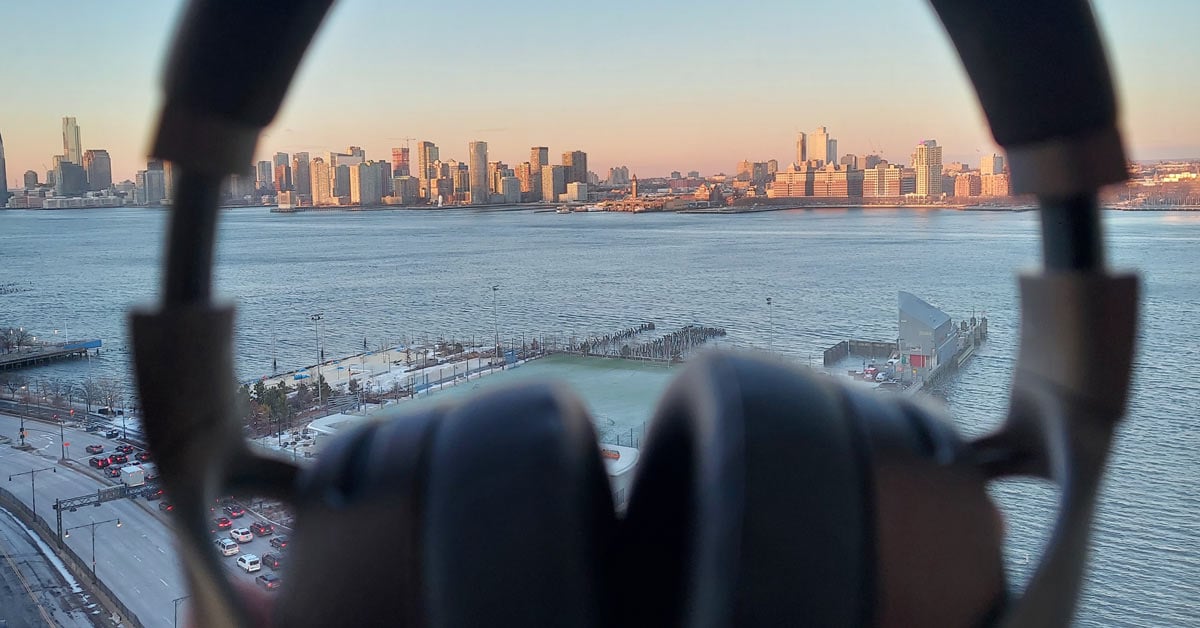
It's all about headphones at CanJam NYC 2025
The sights and sounds of the world's largest headphone show

I'll never take CanJam for granted. That was my first thought as I entered the “world’s premier personal audio show” at the Times Square Marriott Marquis, late February in New York City. CanJam is a traveling event that celebrates the world of audiophile headphones.
And it's the place for the world’s top headphone brands, engineers, designers, and researchers — along with the most informed and ravenous fans.
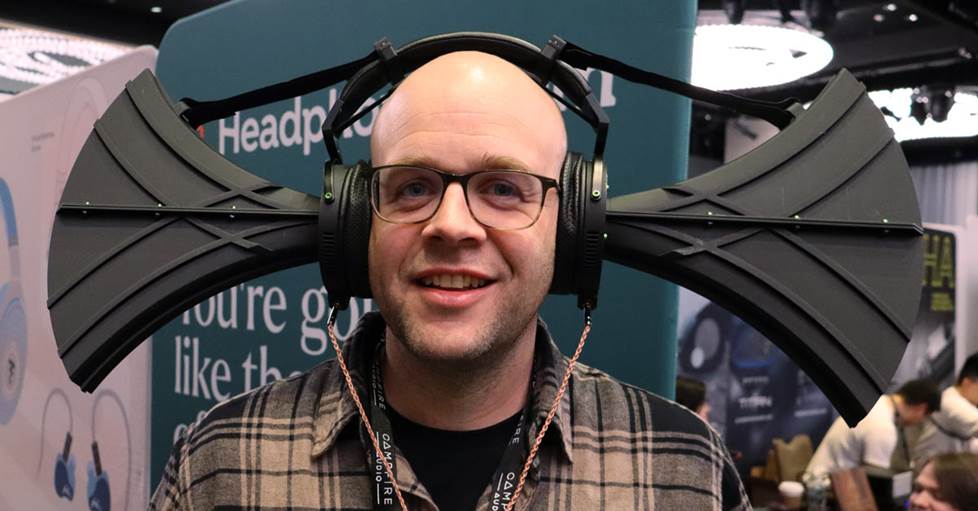
I saw, wore, and listened to the best, wildest, and the weirdest at CanJam NYC, where the world's premier headphone show took the Big Apple by storm.
The biggest CanJam yet
Let me be clear: CanJam isn’t in danger of going away any time soon. Far from it. The event (organized by Head-fi.org) is more popular than ever, with no signs of slowing down. “We’re going to break our [attendance] record this weekend,” said Ethan Opolian, CanJam’s Producer. “That’s the record we set with last year’s show.”
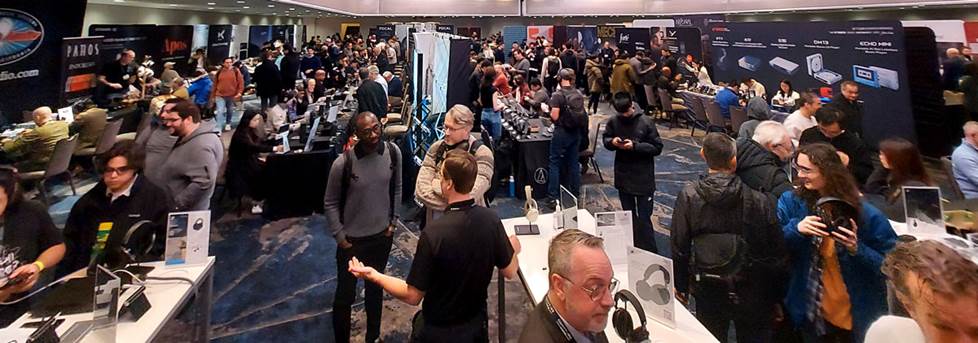
An estimated 2,750 to 3,000 headphone enthusiasts visited CanJam NYC 2025 over the two-day event — shattering the attendance record set the previous year.
It certainly felt like one of the hottest tickets on Broadway. You could feel the energy spilling out into the sixth-floor mezzanine, where the line of attendees wrapped clear around the hotel’s sprawling, extensive elevator system.
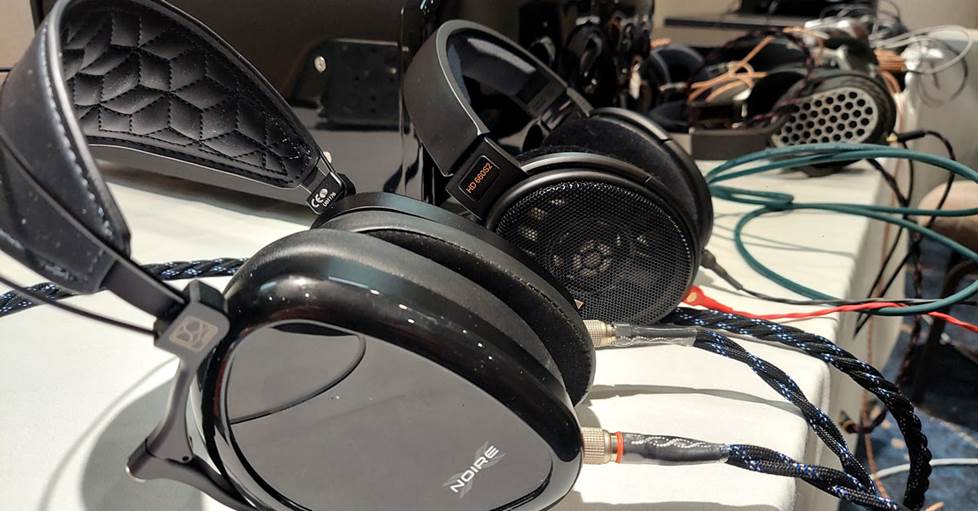
At CanJam NYC 2025, you could audition everything from the brand new (like the Dan Clark Audio NoireX, foreground) to the tried and true (Sennheiser HD 660S2) — driven here by a deluxe Viva Audio tube amp.
But when the doors burst open for the first time, it finally sunk in. I was back. I’ve been fortunate enough to attend several CanJams in the past, between NYC and SoCal, but circumstances kept me away from all the 2024 shows. A potent blend of nerves, excitement, and familiarity flowed through my bloodstream, forcing me to pause and breathe in the moment.
That is until a security guard gave me the classic New York City instructions: “Alright pal, keep it moving!”
Taking the train
By the time CanJam started, I knew better than to hold up the flow of Manhattan traffic, like a frozen-in-place tourist. I had arrived in New York two days earlier and was already acclimated to the city’s brisk rhythm. My journey began, though, on a cold, snowy, and sleepy early morning in Virginia, home of Crutchfield HQ.

A snowy day in Central Virginia, where we started our train ride to New York and journey to CanJam.
I took a leisurely Amtrak ride from Charlottesville, with the jangly, country rock soundtrack of Gene Clark and Carla Olson’s So Rebellious a Lover shimmering through my JBL Tour Pro 3 earbuds. That 1987 album was recently reissued and available on Qobuz in 24-bit/44kHz high-res. The ringing guitars, twangy mandolin, and upright bass thump meshed beautifully with the duo’s gentle, yet urgent vocals. I’ve reviewed the noise-canceling Tour Pro 3s — so I wasn’t surprised by their sonic prowess — but I was pleased with how well they quieted the staccato throbbing of the train.

The JBL Tour Pro 3 earbuds include a "Smart Charging Case" for touchscreen control over music, calls, and much more — even with the phone out of reach.
As we traveled further North, the snow gave way to long stretches of greenery until we hit the Potomac River, where the sun silhouetted the surrounding Washington DC monuments. When we switched engines at Union Station, the cars began to fill up more and the energy and pace picked up. I switched my earbuds over to the new Technics EAH-AZ100s.
Technics was a show sponsor at CanJam, so I wanted to give them a spin. These earbuds also deliver a more “V-” or “U-shaped” tuning than the linearly, Harman-target tuned JBL earbuds (more on that target a little later). As we moved up to Philly, then through Delaware and Jersey, I fed the Technics a Griselda playlist — top-loaded with Westside Gunn's new 12 EP. The boom-bap, dirt-in-the-fingernails hip-hop beats were juxtaposed over clean, airy samples of '70s soul vocals.
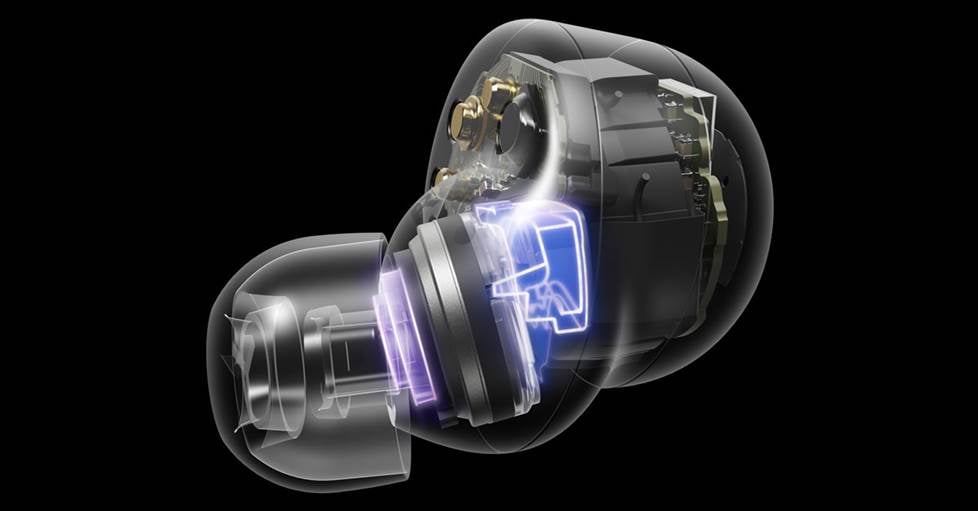
Technics ergonomically designed the EAH-Z100s and positioned the large drivers (highlighted) just outside a thin tube to properly direct the sound — without stuffing cumbersome circuitry inside your ears.
It all came through the Technics with considerable punch and sizzle, no doubt thanks to the 10mm "free-edge" drivers. They use a diaphragm made of rigid, lightweight aluminum, suspended in a special baffle system. And here’s a spoiler alert — I’m working on an upcoming article where I’m naming these the “best-sounding earbuds for small ears.” Even with the larger-than-usual drivers, Technics streamlined the design of the area that you insert into the ear canal — and includes size XS tips.
...And you say New York City!
After arriving at Penn station, the next 36 hours before CanJam were like a musical whirlwind. I dined at not one, but two vinyl bar/restaurants and saw several live music performances. So, perhaps fittingly, in the middle of it all I ended up at the New York offices of Marshall, the fabled guitar amp, speaker — and now headphones — company.
Our friends at Marshall were nice enough to treat us out at the Vinyl Steakhouse, where Pro-Ject turntables provide the soundtrack to the inspired, substantial food and drink options. We met owner Kevin Flannery, who’s worked in the restaurant industry for 20 years.
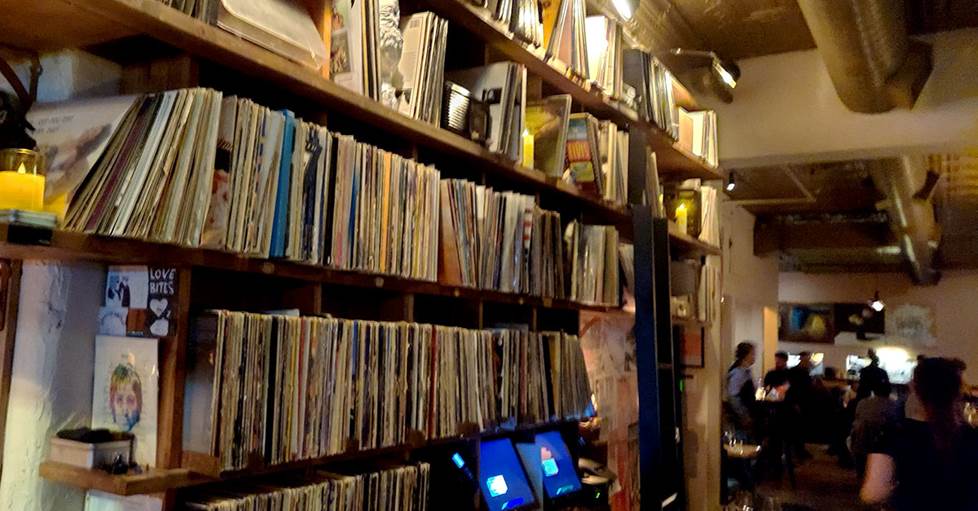
A wall of over 2,000 record albums met us as at the door of the Vinyl Steakhouse, setting the welcome, un-fussy mood.
He said that there are plenty of places with top-notch food and plenty of places that run on vibe, but he hadn’t seen the two combined exactly the way he wanted. So, he opened this place. When we told him we were visiting from Crutchfield in Charlottesville, he whipped out the Rolling Stones Exile on Main St. almost out of nowhere and added it to the queue (right after The Score by The Fugees).
Mick belted out “Sweet Virginia” as we dug into our appetizers of beef carpaccio and warmed ricotta. Watching the record spin through it all delivered an exciting jolt to all the senses.

Vinyl Steakhouse owner Kevin Flannery didn't know we were coming, but still had the perfect record ready for us.
The next day, we visited Marshall's Midtown offices — where, unsurprisingly, instruments and lounge areas were as prevalent as board rooms and cubicles. Vintage posters, photos, and rock-n-roll memorabilia covered the walls, while special edition gear lined the shelves and counters. I was given a sneak peek of some upcoming products.
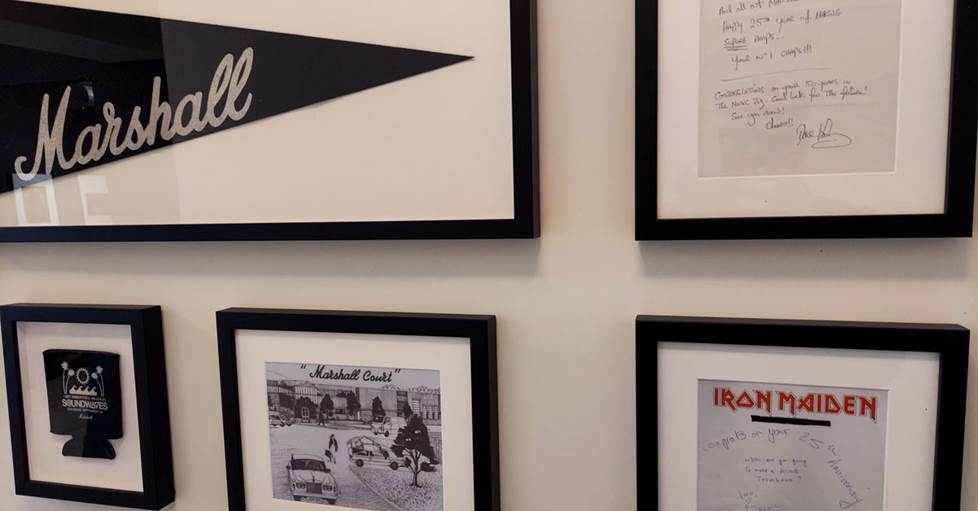
Marshall's deep musical roots were on display around their Midtown offices.
Recent corporate acquisitions brought Marshall's lifestyle speaker and headphone division closer together with their legendary amplification division. The results have been products that are even more informed and inspired by that old-school Marshall power and finesse, mixed with state-of-the-art trappings and features. (I saw it firsthand with the new Marshall Monitor III headphones.)
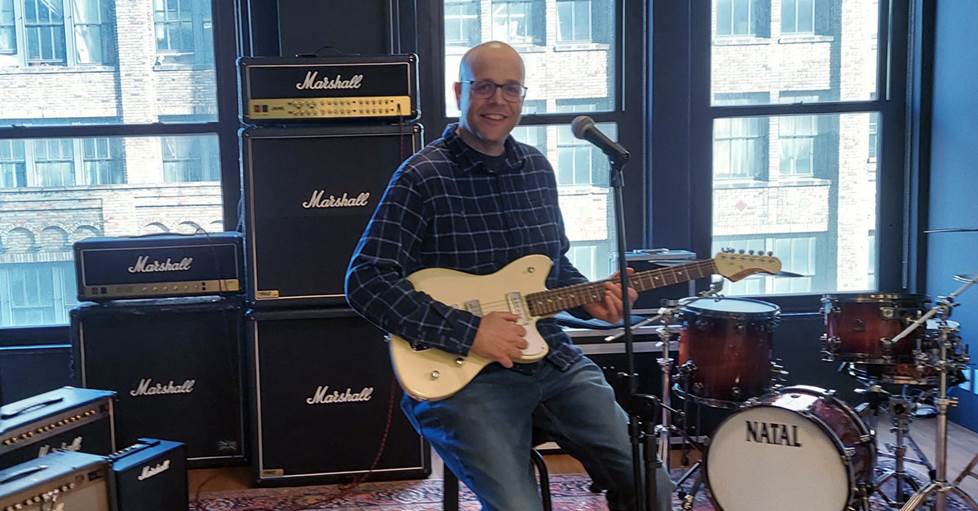
Of course Marshall had a full live music setup — and they even offer guitar lessons for employees. (My first lesson: plug in the guitar if you want people to believe you know what you're doing.)
And let's just say their new, forthcoming products really lean into their roots — in a modern, exciting way. I'm psyched for their release.
That night, we made our way to the Tokyo Record Bar, where the familiar green and blue glow of McIntosh turntables, meters, and tube amps helped illuminate the intimate space.
It’s always been on my bucket list to visit one of New York City's renowned jazz clubs. Intimidated by the long line at the nearby Blue Note, we made our way back near Broadway to the Birdland club, where our three-person group was the absolute last party allowed in for the 8:30 show. The maître d' apologized ahead of time, explaining she could only fit us in at the bar where our view might be obstructed. We were just grateful to get in and hear music!

Ah, New York. It just doesn't get any better than this.
To our surprise, they set up a makeshift table/bar at the merch table. Here, we enjoyed a crystal-clear view of The Band Plus, the accomplished quartet out of Minneapolis. After all the rushing around, it was both thrilling and moving to sit in a room with people collectively listening quietly and attentively.
In fact, it was a fitting precursor to CanJam — we were all in this together, but each absorbing the music in a deeply personal way.
CanJam — brands and gear at the show
Once I entered the show, it didn't take long to find personal audio goodies. Vendors and merchants surrounded the ballroom's perimeter and filled the center with row after row of gear. There were also smaller meeting rooms adjacent to the main floor where you could find brands like Dan Clark Audio, Bloom Audio, and ZMF headphones.
I made my way around to the different booths, listening to headphones and talking to people, to find the best that CanJam had to offer.
Focal
Focal always brings a stunning production and presence to audio events — and their massive booth right up front lived up to the reputation. Several listening stations were sprinkled around their sleekly decorated setup, complete with vivid video screen ads, appropriate for Times Square.
Last year, Focal released what I thought was one of the most underrated headphones of 2024 — the open-back Hadenys. I couldn’t audition them until months after their launch and was surprised that they hadn’t generated more buzz. You can pay less than you would for Focal’s highest-end audiophile headphones and still enjoy the company's delicious dynamics. They also sport a smaller, more portable design.
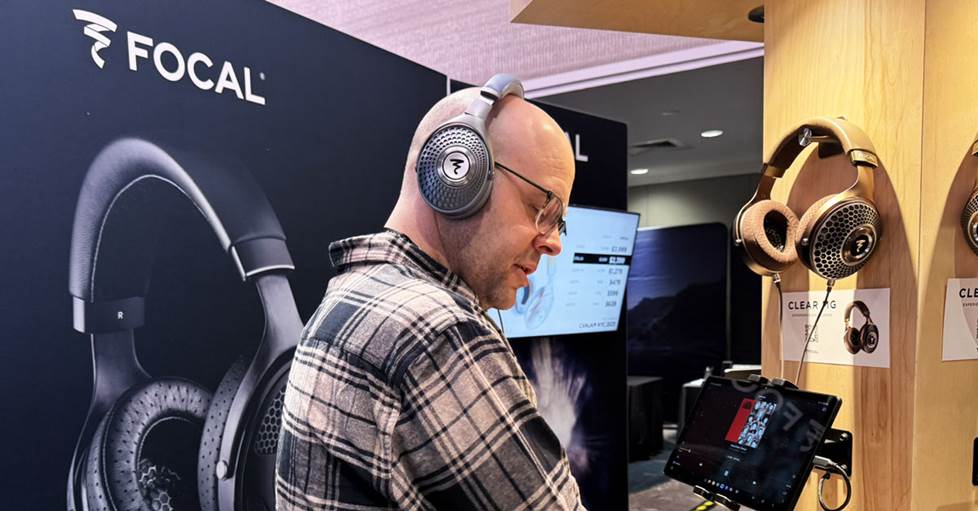
The closed-back Focal Azurys allowed me to forget I was among the crowd — if only for a moment.
I was excited to try the closed-back Azurys at CanJam, since I hadn’t heard them yet. If they can get close to what the Hadenys do for open-backs, they could be on the short-list for best-sounding closed-backs under $1,000. From what I heard on the busy (and loud) show floor, we might have a contender.
They didn’t sound as spacious as the Hadenys, but every bit as detailed and well-controlled. I’m going to further audition these headphones as we work on updating our “Best wired headphones” list.
Oh yeah, and with Focal Utopia sitting right there at the Focal booth, I couldn’t NOT listen to those beryllium-infused beauties. (We’ve detailed their development, along with the development of the popular wireless Bathys noise-canceling headphones in our profile of headphone product manager Mégane Montabonel.) As soon as I hit play, I was immediately reminded why the Utopias cost thousands of dollars more.
As great as the Hadenys and Azurys sound, there’s a whole other level of refinement, power, nuance, and texture in the Utopias.
Sennheiser
Speaking of nuance and texture, that helps explain how Sennheiser plans to distinguish between their newest updates to well-known headphones. For years, they’ve released different versions of their HD 600-series headphones — for many, the original audiophile headphone series with a lineage that traces back to the '80s. Whether it’s the newer HD 660S2, closed-back HD 620S or the OGs, the HD 600 and 650, they all do the same thing: plug in and play music.
BUT, they each have distinct sonic characteristics. Now Sennheiser is trying a similar playbook with their lower-priced "500" series, popular as a gateway into high-end audio. When the HD 560S debuted, it took the headphone community by storm — the staging is wider than the intimate 600-series presentation, but it delivers a similarly clean, well-balanced sound. It also has heaps of high-end detail.

"I think the 600-series is like a clear glass of water, it gives you that three-blob approach to soundstage," said Sennheiser's Eric Palonen. "But I think the 500-series gives you that nice larger, engaging soundstage that more people are looking for these days.”
I've named it the best wired headphone for "audiophiles on a budget" for the past few years. Still, the headphone community had notes. Eric Palonen, PR and community manager for Sennheiser, explained,"Some people said we want some neutral-leaning sound, but the top-end is a lot smoother. So our new HD 505 doesn’t sound bright or shrill, it’s just non-fatiguing, you could listen for hours."
He said it helped reset their naming conventions going forward, where the number that last two digits in the model number will give better guidance on how the headphones sound. He implied that it will start to make even more sense as the 500-series evolves. He remained tight-lipped, but teased yet another new addition to the series. (On March 19, Sennheiser announced the new HD 550 open-back headphones)
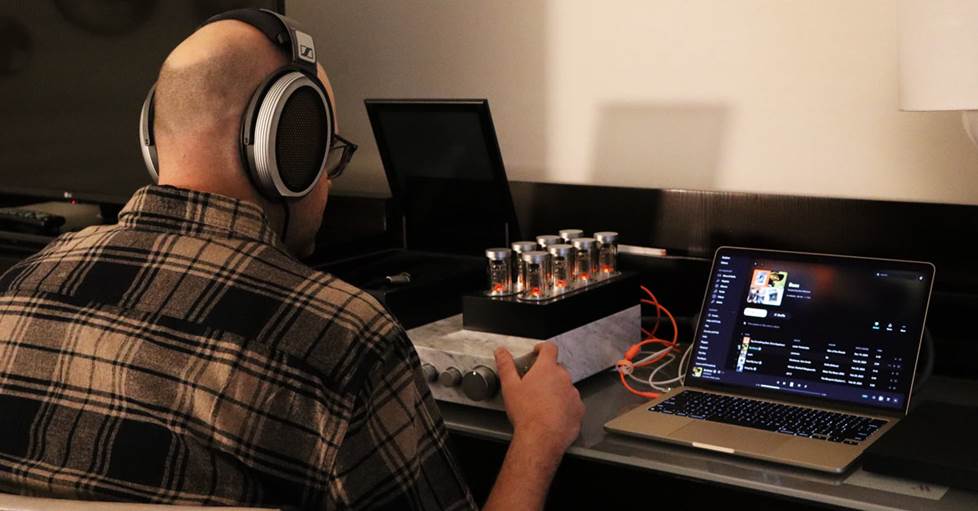
Eric also scheduled groups of attendees to visit Sennheiser's “secret” suite and spend some time with the Holy Grail of headphones — the near-mythical, $60,000 Sennheiser HE-1 electrostats. (Complete with marble base and rising, glowing vacuum tubes.)
"The other response we got from the headphone community," he explained, "was 'hey, we like the analytical tuning, but we want something that’s a little faster and little more bass.' So, we have this balancing act — you don’t want to make a reference headphone that’s too bassy. So, what’s the sweet spot?"
To my ears, they nailed the balancing act with the HD 550s. The 500-series platform is definitely a nice sandbox for Sennheiser to experiment with and they even tweaked the design a bit. They are even lighter than the HD 560 S, already among the most comfortable headphones. Weight is always important to comfort — often, the lighter the better.
Pud’s small-batch, larger-than-life designs
Although that’s certainly not the philosophy of Philip Kaplan, known to the online headphone community as “Pud.” In a ballroom full of super-sized, ostentatious over-ear cans, Pud took it to the next level with his small-batch headphones. Over at the headphones.com booth, I saw the goliath of headphones in person — Ol Thumpy.
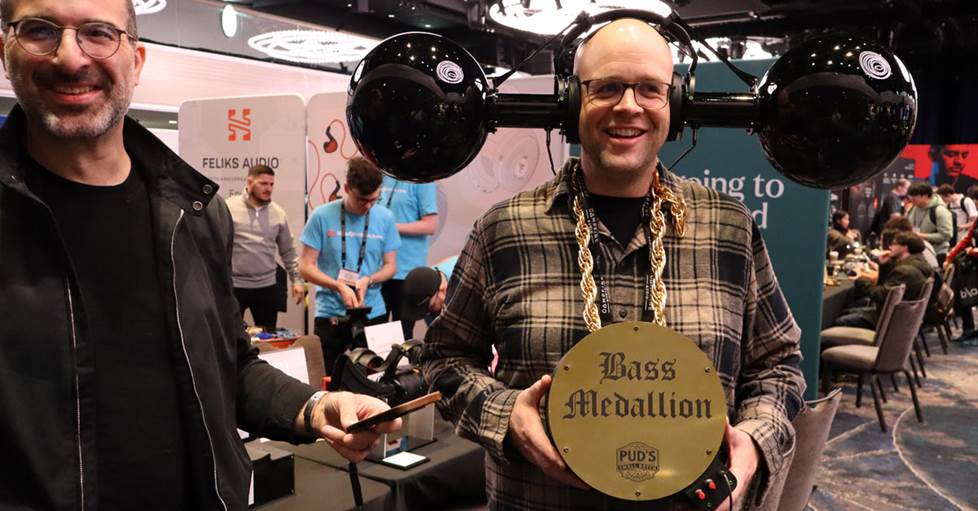
Evil headphone genius (but super-nice guy) Pud brought the ultimate low-end punch combo — "Ol' Thumpy" and the "Bass Medallion."
I’d seen photos and watched videos of Ol Thumpy online, but was still awestruck in its presence. “This solves the ‘problem’ that everyone always talks about,” Pud said. “That you can’t feel the bass in headphones like you do with speakers.”
He positioned the headband on my head so that two bowling ball-sized radiators were balanced properly. For a few seconds I was surprised at A) how well they stayed in place, and B) there was little to no strain on my neck and shoulders. Just like we learned with our own in-house headphone comfort testing, it’s not always so much about the weight of the headphones, but how well it’s distributed. Plus, security and stability are the two fit factors that we found correlated with comfort most.
Although as soon as I turned my head to look at something, it threw off the weight and Ol Thumpy pulled me to the left side and down. “Yeah, you don’t want to move your head,” Pud told me, “which is tough, because the bass will make you want to nod along.”
In other words, these headphones aren’t first choice for the gym or a plane.
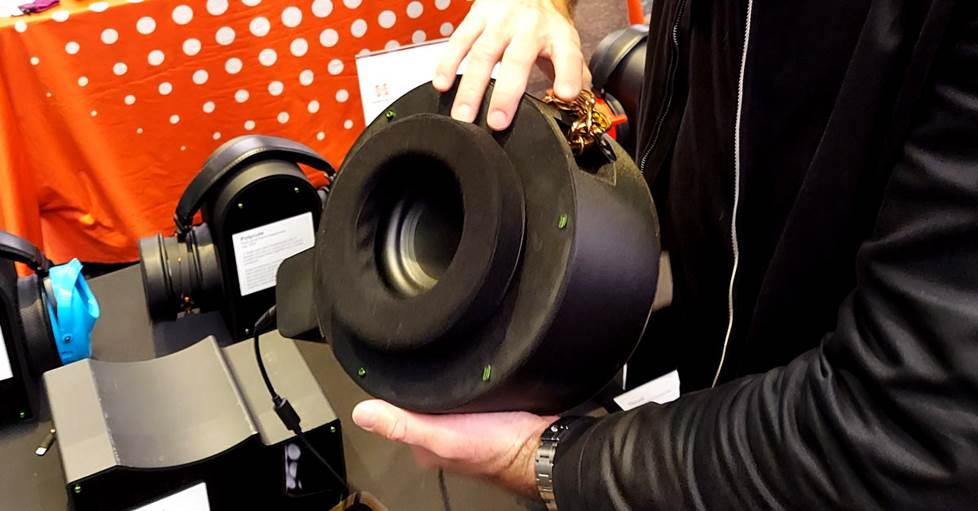
Pud showed me the back of the bass medallion: "It features a 100-watt amp, a six-inch high-excursion speaker, and a custom 170mm chest pad made by Dekoni."
But when coupled with the Bass medallion — An oversized, Flavor Flav-style pendant with a built-in subwoofer, held by an extra thick chain — it packs a serious low-end punch. “People always say they want that chest thump,” Pud said. "So, I gave it to them."
I definitely felt the low-end rumble when the bassline dropped on the classic Mobb Deep track, “Shook ones Pt. II.” My whole skeleton seemed to rattle with every sub-bass thump.
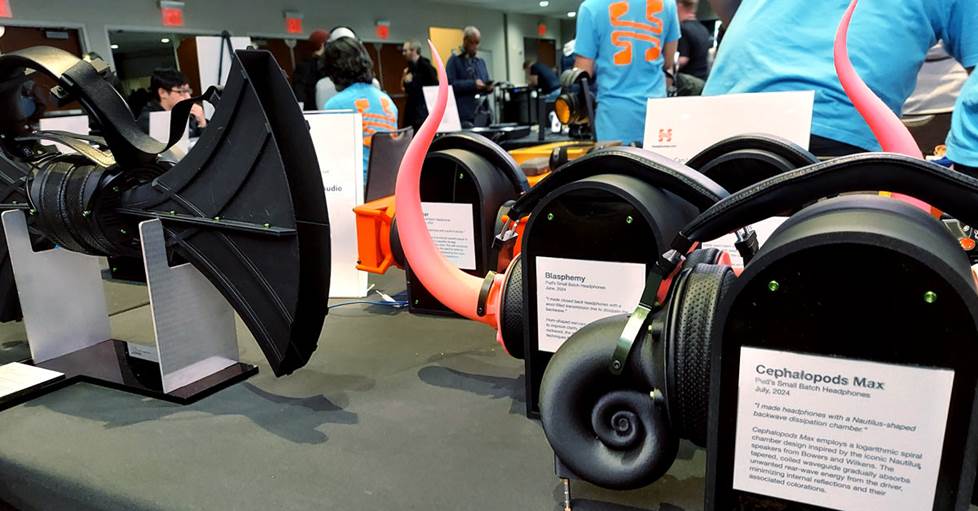
Headphones.com had several of Pud's inventions on display.
Pud’s inventions are obviously a commentary on audiophile-speak, taken to the nth degree. But what’s brilliant about the parody is that it is rooted so much in reality. This headphone combo delivered brute-force bass, but in an oddly musical and satisfying way.
Likewise, the “Headphone Daddy” promises “clean audio,” and sure enough there are Scrub Daddy sponges on each earcup. But guess what? The pattern and material of the sponges actually serve as acoustic filters to tidy up and smooth out harsh peaks in the treble. And they measure surprisingly well!
Meze Audio
Meze Audio debuted a new headphone at CanJam NYC that also made clever use of acoustic filters. I reviewed the Poet planar magnetic headphones and noted how favorably they compared to Meze’s flagship models, like the Elite and Empyrean II. For the sound, I noted that “even with [an] extended soundstage, the bass has muscle, the highs are crisp, and the mids are given gravitas. But most importantly, they all complement each other well.”
One of Meze’s most notable new inclusions is the patented "AMTS" damping filter, which Meze licensed from Dan Clark Audio. Meze acoustic engineer Alex Grigoras was at the show — and he told me a conversation between the two companies at last year’s CanJam helped spark the deal. Alex also explained that Meze implemented the technology a little differently.
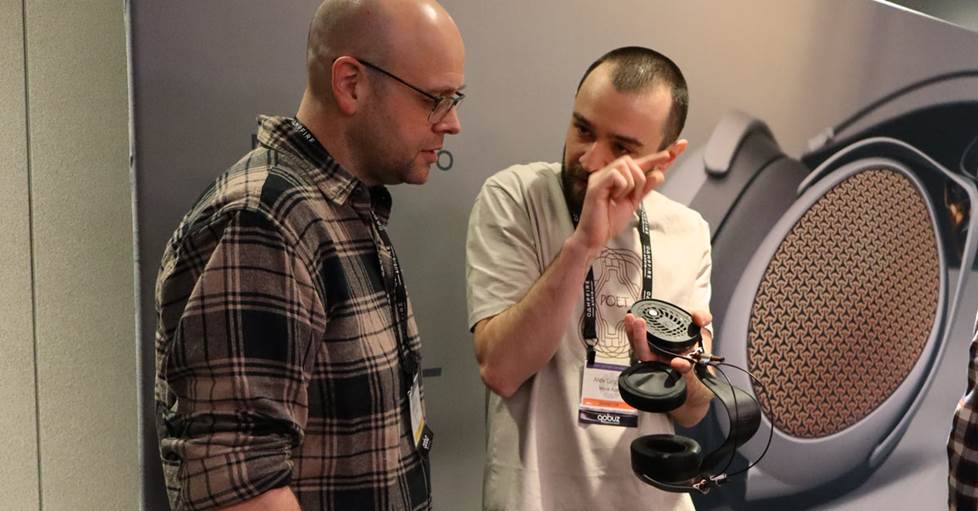
Meze Audio engineer Alex Grigoras breaks down the sonic philosophy behind the new POET headphones.
“Instead of a network or series of wave guides and resonators [placed] in front of the driver,” he said, “we’re using the openings in the driver frame itself. We [strategically] covered a few of the openings with a mask that pretty much converts them into a quarter-wave resonator.”
I asked Alex what the company’s overall goal was when they first conceived the Poet headphone. He said the big picture was to deliver smaller open-back planar magnetic headphones at a lower price — that still nailed the premium “multisensory’ Meze experience. “Sonically, we wanted a nod to the Elite,” said Alex. “With the Empyrean II, we took a different route than usual and went with a more neutral tuning. But this is a little bit more of a return to our house sound — a little more warmth, but with a little sparkle to it.”
He said the process always starts with the drivers, in this case designed with longtime collaborator Rinaro, a Ukrainian research group. Then they started looking at the materials around the driver, including earcup and pad materials, how the ear pads attach, and how they position your ears from the drivers.
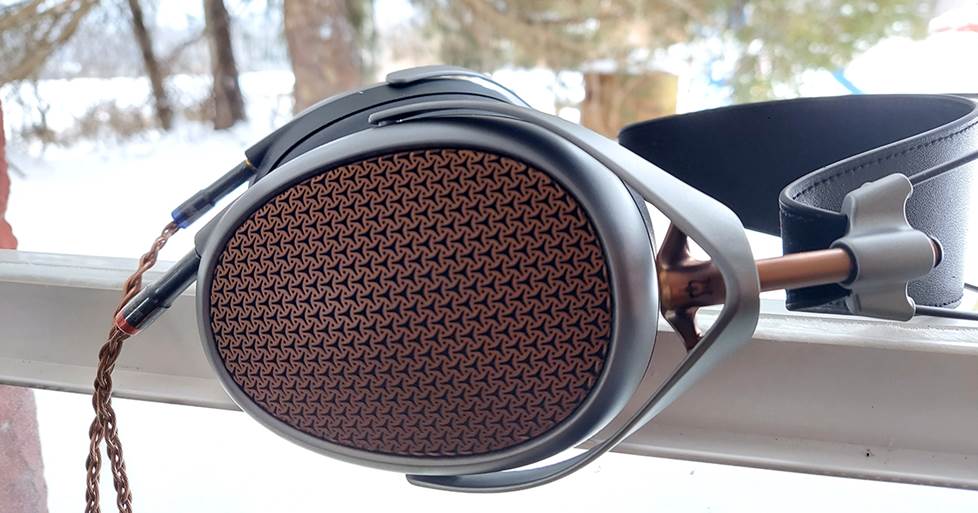
The week before CanJam, I was snowed in at home with the Meze POET open-back headphones.
And of course, Alex and Rinaro had to make sure anything they did on the sound side didn’t compromise Meze’s strong visual aesthetic or world-class comfort. Founder Antonio Meze and his design team are celebrated for making keepsake headphones that are works of art — just look at the gorgeous design of their Alba IEMs. Their 99 Classics use a spring suspension system that set the tone for all their headphones — and were crowned Crutchfield’s most comfortable headphones.
Yamaha/Qobuz
High-res streamer Qobuz was a show sponsor and also provided the tunes for nearly every booth at the show. Qobuz is my music service of choice, not only because of the top-notch audio quality, but also the fact that they aren’t 100% algorithm-based. They have DJs, music journalists, and other experts who create their playlists and editorial content by hand.
And the gear at their booth was legit. They had Yamaha’s statement YH-5000SE & HA-L7ABL headphone and amp combo on display, serving up their pure high-res music. I chose a track from one of their featured releases that week, DJ Notoyo presents Tokyo Bliss — Japanese Funk, Boogie & City Pop from King Records 1974-88 (in 24-bit, 44.1 kHz).
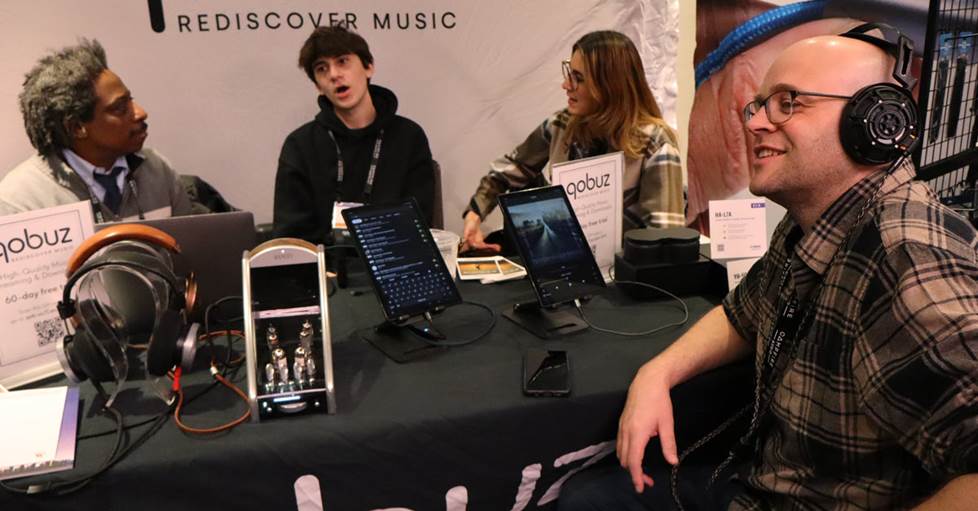
Our friends from Qobuz fed high-res tunes to the Yamaha YH-5000SE headphones.
The track was “Sabita Gambler” with vocals from Mami Ayukawi that sparkled and leapt from the YH-5000SE Orthodynamic headphones. “Orthodynamic” is Yamaha’s classic take on planar magnetic headphones, revived from their 1970s-era models and built in their Japanese factory alongside their grand pianos. These headphones delivered an “originating from nowhere and everywhere at the same time” presentation, a neat phenomenon with tracks that offer a kaleidoscope of sound like this.
Grado
Grado brought some old-school charm — while still showing up with their latest and greatest new headphones, their Signature HP100 SE and wooden-cupped S950 headphones. It was a family affair, with longtime president and chief headphone-maker John Grado, his son and VP of operations Matthew Grado, and COO Rich Grado (John’s brother) all on hand to talk shop.
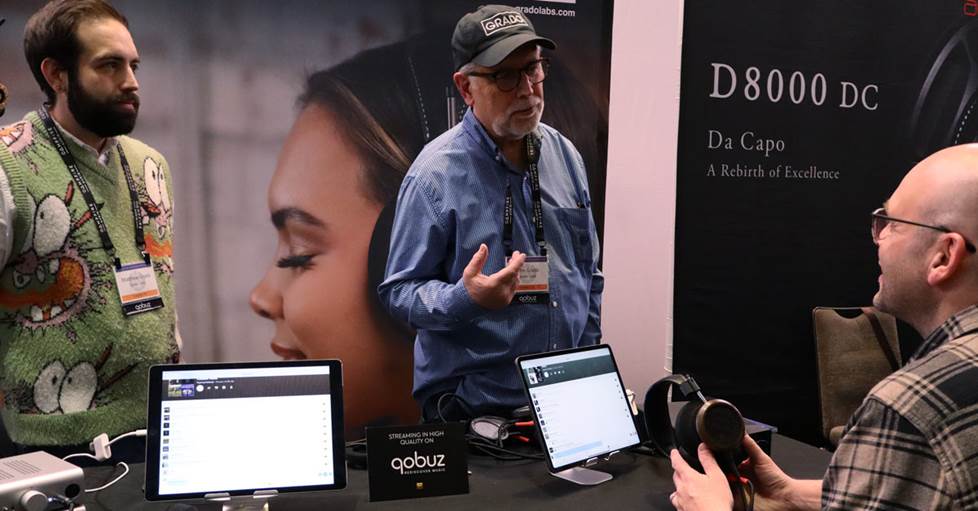
Matthew and John Grado explain the process of developing and building headphones by hand in their Brooklyn shop.
Both headphones were created to honor their founder and audio industry luminary Joseph Grado, on what would have been his 100th birthday. I asked John if the release offered a chance for reflection, and he quite honestly and frankly told me that I had it backwards. He said that “Uncle Joe’s” birthday was the inspiration for the headphones, and that was their chance to look back. But as soon as they hatched the idea and the creation process began, they had to focus on the present.
“I always think of it like cooking,” John said. “You start working on it, developing it, you’re listening and you keep going back and forth, back and forth. Your only focus is getting the ingredients just right.”
Like most Grado headphones, both models offered plenty of garnish in the treble region, with the sweetness and lushness reserved for the midrange. I preferred the S950s in my way-too-brief side-by-side comparison. Their Brazilian walnut wood earcups seemed to mellow out the highs just a tad, while still delivering those well-known Grado transients and detail. I asked John if he had a preference between the two and he just smiled at me — I guess the chef keeps his preferences to himself!
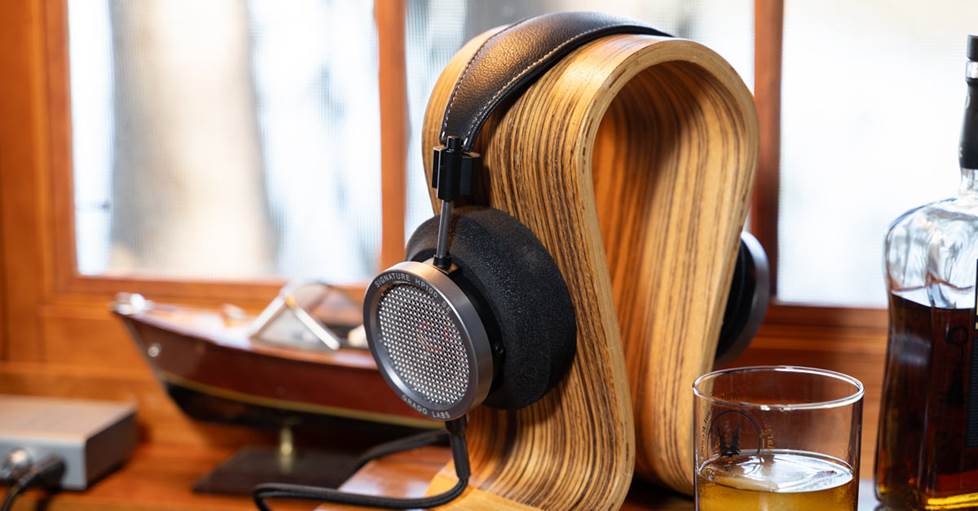
The Grado HP 100 SE design is inspired by founder Joseph Grado's first headphone, the game-changing HP-1 from the early '90s.
These headphones were developed and built in the same Brooklyn shop that’s been in the family since 1918. (A 40- to 50-minute subway ride from where we were standing.) We talked about Joe’s transition from watchmaking to phono cartridges, that eventually led to the start of Grado Labs in 1953 (with an assist from Saul Marantz himself along the way). It softened the brothers up a little, as they wistfully explained how Uncle Joe’s precision and skill translated into audio gear.
“The parts in our phono cartridge are made on Swiss screw machines [that were used in watchmaking going back a century]”, said John. “My uncle could take a piece of brass and make miniature flywheels out of it.”
“And having fingers nimble enough to work with those tiny parts,” Rich said. “And the patience.” He looked around the table with a smirk and added, “patience is key when you work with family.”
iFi Audio
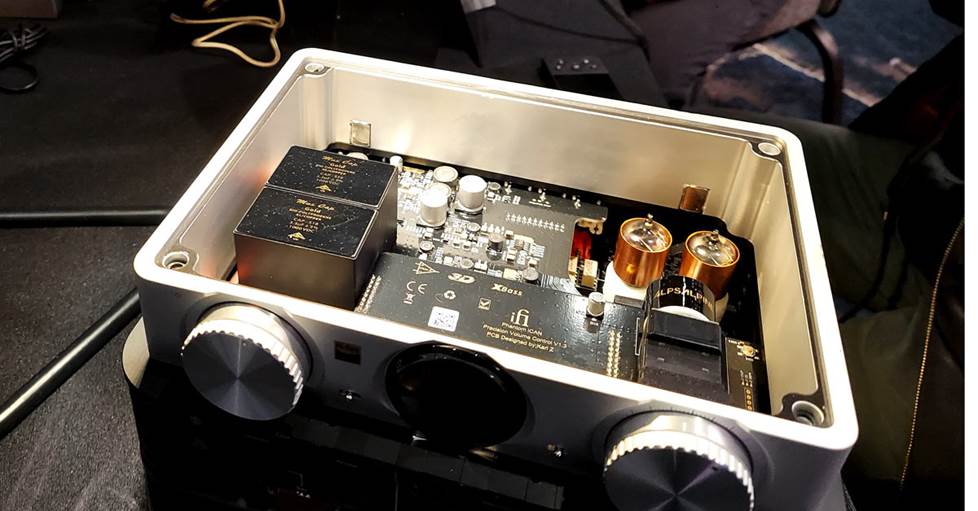
A look "under the hood" at the advanced circuitry inside iFi Audio's powerhouse amps and DACs.
You’ll find iFi Audio gear filling up our best-of-the-year lists for both DACs and headphone amps. This photo shows why. iFi removed the top plate of their Pro iDSD Signature DAC/amp to show all the advanced circuitry and power inside.
The rich, spirited conversations of CanJam
“I’m really into drum and bass, so I always look for tactility over everything.” That’s the kind of thing you hear in passing as you stroll around the CanJam floor. And conversations — both the ones I overhear and participate in — are what I cherish most about these events.
I talked to one attendee who traveled from Seattle. He had been to CanJam Dallas last fall and heard two different IEMs in the $4,000 range but still couldn’t decide between them. So, naturally, he flew across the country to audition them again. I nodded along knowingly — as much as we love the gear, it’s not truly about that.
There’s also a certain comradery from our shared experience, perhaps best exemplified by the famed “Watercooler” board on Head-Fi, a free-flowing discussion group for the most fervent headphone fans. Down in the Marquis’ ground floor loading area that straddles 45th and 46th street, I saw Watercooler member, Brent, who I met two years ago at CanJam SoCal. He told me he’s now closing in on his 20th CanJam and this one was special, because it promised to be the largest gathering of the Watercooler crew yet.
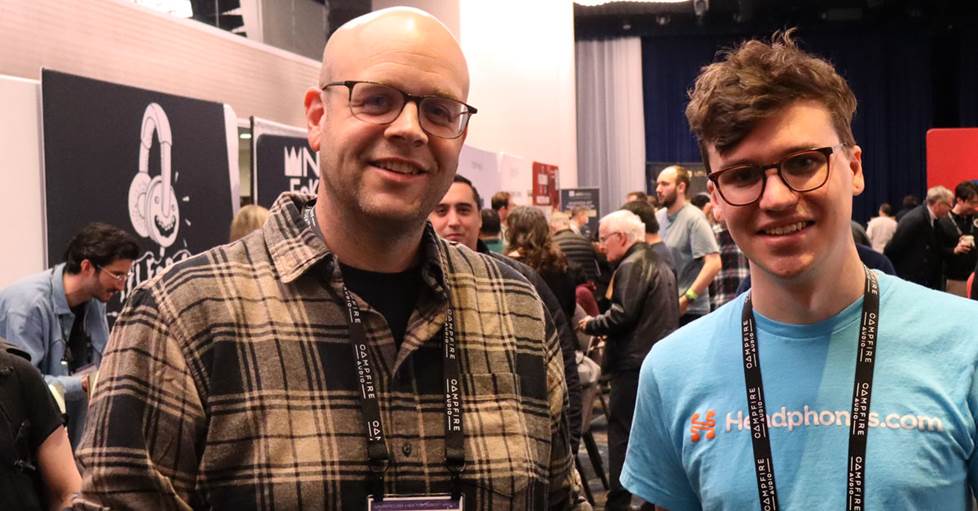
I briefly caught up with the (very busy) DMS, who I recently interviewed about his Project Omega headphones.
That common interest in "this hobby" came up in my recent interview with YouTube reviewer DMS, who I ran into at CanJam, along with the rest of the headphones.com crew.
He was busy at the show as you can imagine, creating videos, trying out gear, and showcasing his own Project Omega headphones. But in our interview, we talked about how he got hooked into this hobby early. “Don’t get me wrong," he told me. "I love stereo, I love two-channel…but there’s something about headphones. Rather than having the sound in the room with me, be fully immersed in it. You know, in my own little world.”
Many of us at the show agreed. At Audeze’s booth, I met Sheldon, a defense contractor who also took the Amtrak up from Maryland. He’s a longtime Audeze fan who was originally hooked on their top-shelf LCD-series headphones with the LCD-3s. Sheldon said when we first got into high-end audio, he tried Audeze and said, “this is how I want my music to sound.”
He said that the 3s in particular are detailed but have a warm sound that he likened to sitting in a jazz club — which definitely resonated with me from our night at the Birdland. He also has the LCD-4z and the detail and technical performance amazes him.
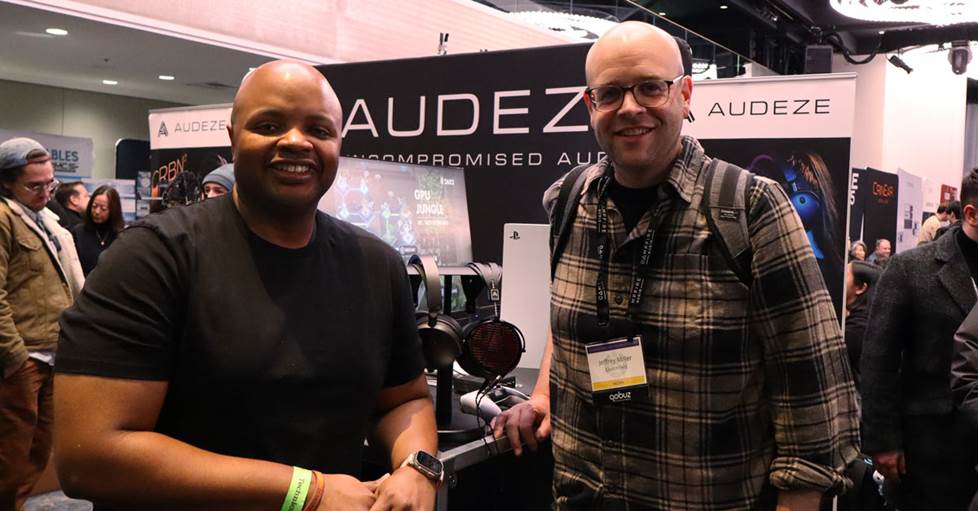
Sheldon took the train up from Maryland to check out all the personal audio gear and catch up with his friends from Audeze.
“I feel like headphones when they have a lot of detail, it’s more short-burst focused listening,” he said. “If I’m trying to work or do something else, I’ll gravitate toward the 3s. All that detail can be overwhelming when you need to focus on a task. That’s why it’s good to have more than one headphone…to me the 3s and the [flagship] LCD-5s, for example, do have detail, but the warmth and colorization are so much more forward, that you don’t get overwhelmed by the fact that it’s detailed.”
The enlightening and the lively at the CanJam seminars
Another reason why I’ll never take CanJam for granted? There’s always something new to learn. I almost skipped the seminar by Dr. Sean Olive, Harman's head of acoustic research — I’d seen his previous seminars and figured I knew the beats of his latest research. (His team developed the famed “Harman Target” listening curve and I visited the Harman Labs last year to find out what they're working on now.)
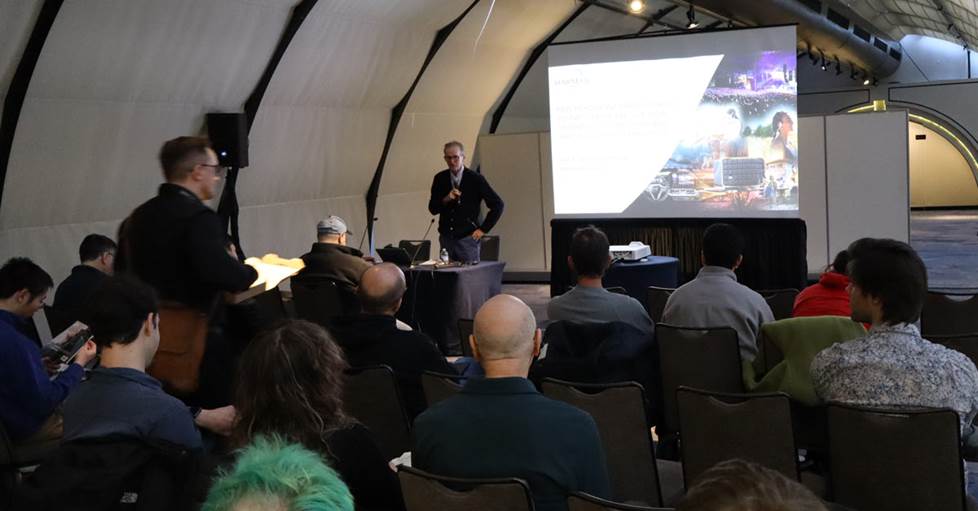
The CanJam seminars took place in the 16th floor Skyview venue in the Marriott Marquis. (Those curtains open up to a 270-degree view of Times Square in all its glory.)
I’m glad I didn’t skip it. He discussed not only his own research, but the work of others trying to find a preferred listening target for headphones — the balance of frequencies to please the most listeners. Not only had he revamped the presentation, but he also provided extra commentary and context, so I would’ve missed the “music between the notes.”
I also would’ve missed the transition between Dr. Olive’s seminar and the next, led by Axel Grell of Grell Audio. Axel was the former chief engineer at Sennheiser and architect behind many of their classic headphones (including the HE-1 and HD 600 series). And not only did his seminar immediately follow Dr. Olive’s, it was in conversation with it.

A meeting of the headphone luminaries: Axel Grell (left) and Sean Olive catch up between their two highly attended seminars.
He took the idea of the Harman Target curve and said we can better dial in preferences by expanding the focus beyond frequency response. He’s begun to study some of the other “factors that influence the perceived sound of headphones.” These are both factors that can be measured and those that can’t — like the mood of the listener, environment, tastes in music, and habitual conditioning.
Axel says some of these variables are too clumped together when it becomes “which set of frequencies do you prefer.” He’s working on isolating some of those other factors and testing what he can.
Like any new idea, it was met with a healthy dose of skepticism. There were some leaps in logic and conclusions made that were hard to overlook, even if we all knew they were well informed. That’s probably precisely why we needed a little more, we didn’t have his vast experience, so in some areas didn’t know how he got from point A to point B.
So, Axel was peppered with questions about some of these perceived presumptions. Blaine LaCross (the measurement guru known online as "Mad Economist") clarified some misconceptions about Harman's studies, like the idea that "only 64% of listeners prefer the Harman Target." That's based on cluster data where two smaller groups preferred either more bass or more treble — but the Harman Target was still incredibly popular with those groups.
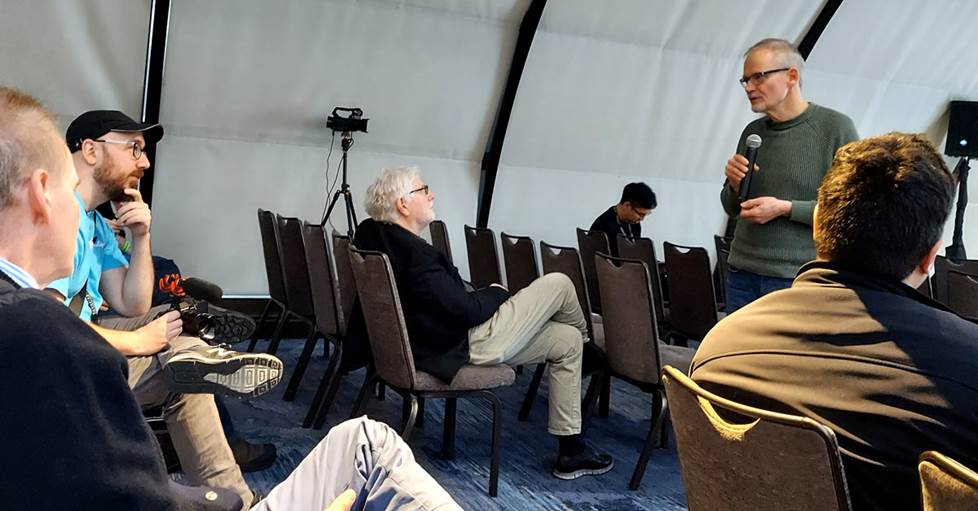
Axel takes questions from the audience, which includes renowned headphone expert and reviewer, Resolve.
Resolve from headphones.com even questioned the premise that headphone listeners — essentially trapped in a “sound helmet” — were really still “chasing” the sound of speakers in a room. That’s been at the center of headphone research going back ages. It’s even part of the thesis for the Harman Target. (Especially when there are people who don’t even experience outside-the-head localization, or the very idea of soundstage in headphones.)
Is it possible that so many listeners now have a headphone-first mentality — think of my conversations with Sheldon and DMS — that we might not care if headphones can mimic reflections or the sound characteristics of a room? Or maybe that's all just built into the psychoacoustics and our brain's relationship to sound. That was just one of the challenges lobbed back and forth between all the different studies and lectures.
Seeing all of this reminded me of an indie band that’s been an underground favorite, taking its next step in fame. The Dr. Olives and Axel Grells of the world have propelled headphones past their “underground” roots to where we all must think a little more sophisticatedly about them. Even if that means turning back on these studies and examining some of our long-held principles or digging deeper into them.
But before we get too Almost Famous-y, there’s one Stillwater parallel that doesn’t track: nobody is taking themselves too seriously. You could forgive anybody in the room for being defensive or overly precious, especially if they had put in all the research and work. Or spent their hard-earned money on a piece of gear.

When things got heated at CanJam, I could take a breather by glancing out at the, well, breathtaking New York skyline.
Instead, while the back-and-forth could get as spicy as a silibant headphone, it never crossed the line to contentious. Everyone was cordially respectful of each other — even in cases when one party or another knew they were right.
Conclusions from CanJam
And that’s what’s so great about CanJam. These days, it feels like we’re so separate on every issue — like we’re even past the point of universal truths. Still, I don’t know, maybe it’s naïve to look at things this way, but it was heartening to see people meet up, disagree about things, wear their passion on their sleeves, even dig in on their perspectives, but still keep an open mind and remain civil.
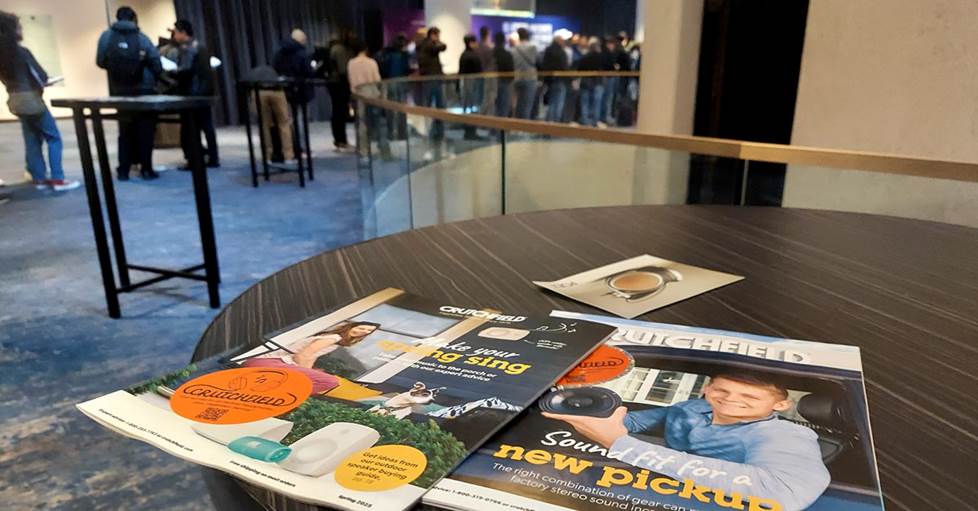
A steady stream of new attendees flowed through the door throughout both days of CanJam.
I know headphones are low stakes in the grand scheme of things — so it would be disrespectful for me to extrapolate this experience to more pressing, urgent issues. But we are talking about people’s life works and legacies.
So, maybe it should be encouraging to see them handle adversity with grace. Maybe it's a sign that there's hope after all.
Or maybe CanJam is simply a special place. We’ve found common ground so specific that it's rare (traveling) real estate. Perhaps since we’re all part of a niche of a niche, we’re more prone to treat people with respect when we’re together at CanJam.
Either way, it's a place I'll never take for granted.
We're here to help
Have questions or just want to talk headphones and audio? Contact us today.
Our expert Advisors know this stuff inside and out. And free lifetime tech support is included with your Crutchfield purchase.








Comments (0)